



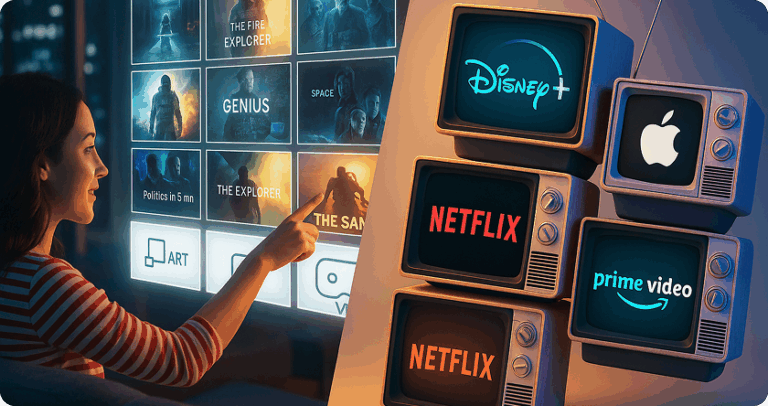



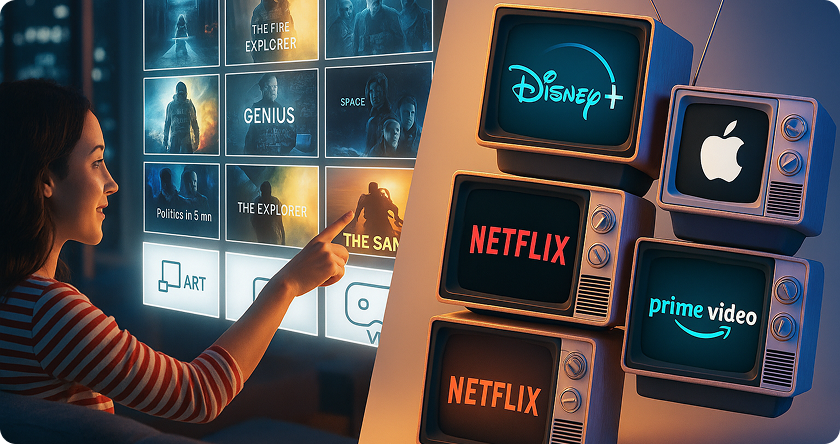

Streaming services are on fire, and there’s no sign of them slowing down. From the comfort of your couch (or on the go), you can now binge-watch your favorite shows, discover hidden gems, or get hooked on the latest blockbusters—all at the click of a button. Platforms like YouTube, Netflix, and Amazon Prime Video aren’t just changing the game—they’re rewriting the whole playbook.
The video streaming market is now valued at over $670 billion, and it’s expected to keep growing, reaching an eye-watering $2.49 trillion by 2032, with a CAGR of 17.8%. That’s some serious growth! As of 2024, YouTube remains in the top spot, followed by Netflix, Disney+, and Amazon Prime Video. Meanwhile, services like HBO/Max, Hulu, Peacock, and Paramount+ are scrambling for a piece of the pie outside the top 10. If you’re not keeping up, well, you’re missing out on what the future of entertainment is. Streaming isn’t just a trend—it’s the new normal, and cable TV is officially feeling old-school.
It’s not just about how we watch content—it’s about how we expect it. Instant access, personalized recommendations, and the ability to watch anytime, anywhere. The entertainment industry is evolving fast, and if you’re not already onboard, you might be left in the dust.
How Streaming Services Affect Movie Theaters and Traditional Broadcasting
As streaming platforms continue to dominate viewer attention, their ripple effect on movie theaters and traditional broadcasting is undeniable, reshaping how content is produced, released, and consumed worldwide.
- Global box office revenue fell by over 70% in 2020, and though it has since rebounded, it remains below pre-pandemic levels as audiences increasingly prefer streaming first releases.
- Major studios like Warner Bros. and Disney have adopted hybrid release models, often premiering films on their streaming platforms the same day as a theatrical release.
- Traditional broadcasters have lost prime-time viewership significantly — for example, U.S. cable TV saw a more than 40% drop in viewership among adults 18–49 from 2015 to 2023.
- Streaming platforms offer on-demand access, no ads, and personalized recommendations, which traditional TV struggles to match without significant transformation.
- Theaters are now focusing on immersive experiences (e.g., IMAX, 4DX) and event-based screenings to stay relevant and drive footfall.
- Some independent cinemas have pivoted to screening niche films, hosting community events, or partnering with streamers for special releases.
- Broadcasters are shifting to digital-first models, launching their own OTT platforms (e.g., Peacock, Paramount+, BBC iPlayer) to retain audiences.
Inside Streaming Services: How They Power the Future of Entertainment
Let’s be honest—streaming services have completely turned the entertainment world on its head. No more waiting for your favorite show to air, no more flipping through hundreds of channels, and missing out on that one episode because of “scheduling conflicts.” Streaming has made us the masters of our viewing universe.
But why exactly are these platforms the future of entertainment? Here’s why:
- On-Demand Freedom
Streaming platforms give you unmatched freedom to choose what to watch, when to watch, and how to watch it. Want to watch an entire season in one sitting? Go for it. Want to pause halfway through for a snack and pick up where you left off? No problem. With platforms like Netflix, Disney+, and Amazon Prime Video, the content is always available at your fingertips. - Binge-Watching is Here to Stay
The rise of streaming services has legitimized binge-watching as a lifestyle choice. It’s an art form now. And let’s face it—no one’s complaining. Streaming has made it easier than ever to dive deep into storylines, discover new series, and get lost in content for hours (or days). Plus, with Netflix’s “Skip Intro” button, we’re saving valuable seconds for more TV watching! - Personalized Entertainment
The magic of streaming lies in personalization. Algorithms don’t just suggest shows—they practically read our minds. Based on your viewing habits, streaming platforms recommend shows and movies you didn’t even know you needed. As 70% of Netflix users agree, their platform’s recommendations often lead to finding hidden gems they wouldn’t have discovered otherwise. It’s like having a curated library just for you. - Global Access, Anytime, Anywhere
Streaming is borderless. Gone are the days of region-locked content or waiting for shows to hit your country. Streaming services have opened up a global network where content can be watched from any location on any device—TV, laptop, smartphone, or tablet. Whether you’re traveling, commuting, or lounging at home, you can always tune into your favorite shows. - Original Content Drives Subscriptions
What sets streaming apart is its investment in original content. From Netflix Originals to Disney+’s exclusive Marvel series, streaming platforms are creating and distributing content that you can’t find anywhere else. This keeps viewers coming back for more, with 67% of Netflix users stating they subscribe primarily for the exclusive shows and movies. - The Shift from Traditional TV
Streaming platforms are taking over where traditional TV left off. No longer confined to scheduled programming, viewers can now watch what they want when they want, without being at the mercy of cable providers or time slots. The real kicker? With no commercials (for most plans), we get more content, fewer interruptions. - A Future of Interactive and Immersive Experiences
The future of streaming isn’t just about watching. It’s about interacting. Whether it’s live sports, Twitch gaming streams, or interactive Netflix series like Bandersnatch, streaming services are integrating interactive features that make the viewing experience even more engaging. This is just the beginning of what’s possible.
Why Streaming is the Future
Streaming isn’t just a fad or a convenient alternative. It’s the new standard in entertainment. With flexibility, personalization, and unmatched content variety, streaming has not only replaced cable—it’s set to continue its dominance as the future of entertainment. The world of traditional TV is shrinking, and streaming services are quickly becoming the heart of how we consume content.
So, buckle up. The future is streaming, and it’s already here.
The Shift from Traditional TV to On-Demand Streaming Platforms
As we compare Traditional TV with the more modern On-Demand Streaming, it’s clear how much the entertainment landscape has evolved. The following table breaks down key differences between the two, highlighting why streaming platforms are taking the lead.
| Traditional TV vs On-Demand Streaming | |
| Limited to scheduled programming | Unlimited access to entire libraries |
| Fixed time slots for shows | Watch anytime, on demand |
| Commercial breaks interrupt the shows | No ads |
| Mostly tied to TV sets | Available on TVs, tablets, laptops and smartphones |
| Monthly cable subscription, often bundled with other services | Flexible subscription models, often ad-free |
| Content is often region-locked | Global access without region restrictions |
| No personalization; standard programming | Personalized recommendations based on viewing habits |
Top Streaming Platforms Globally
| Streaming Platform | Subscription Base | Global Rank | Key Content | Key Features | Notable Regions |
| YouTube | Over 2 billion active users | #1 | User-generated content, Music, Movies | Free content with ads, YouTube Premium | Global |
| Netflix | 230+ million subscribers | #2 | Movies, TV Shows, Originals | Ad-free, Multiple profiles, Global content | Global |
| Amazon Prime Video | 200+ million subscribers | #3 | Movies, TV Shows, Originals, Sports | Ad-free, Amazon integration, Multiple profiles | Global |
| Disney+ | 170+ million subscribers | #4 | Disney Classics, Marvel, Star Wars, Pixar | Ad-free, Multiple profiles, Exclusive releases | Global |
| HBO/Max | 80+ million subscribers | #5 | Movies, TV Shows, Originals | Ad-free, Original content (HBO, Warner Bros.) | USA, Europe, Latin |
| Hulu | 45+ million subscribers | #6 | Movies, TV Shows, Originals, Live TV | Ad-supported & Ad-free plans, Hulu Originals | USA |
| Peacock | 30+ million subscribers | #7 | Movies, TV Shows, Sports, News | Free tier, Premium & Premium Plus options | USA |
| Paramount+ | 60+ million subscribers | #8 | USA, Latin America |
Digital Content Consumption: How Streaming Has Changed Viewing Habits

The Impact of Subscription-Based Streaming Services on Traditional Entertainment
Binge-Watching Culture: How Streaming Has Reshaped Our Entertainment Preferences
Ah, binge-watching—where time ceases to exist, and our productivity plummets to an all-time low. Gone are the days of patiently waiting for your favorite show to air week after week. Now, we have streaming platforms that deliver entire seasons with the click of a button, ensuring we don’t have to endure the agony of anticipation. Because why wait for next week’s episode when you can watch all 10 in one sitting and ruin the plot for everyone else, right?
Streaming services like Netflix and Disney+ are enabling our worst habits. The term “just one more episode” has become an everyday mantra, and let’s face it—we all know it’s a lie. We’re fooling ourselves, thinking we’ll stop after one. But deep down, we know we’re diving straight into episode two, then three, until the sun rises and we’ve watched an entire season without blinking.
But let’s be real—this isn’t just about watching content. It’s a cultural shift. We’ve gone from scheduling our lives around TV air times (remember when you had to rush home to watch a show?) to having instant, on-demand access to anything and everything. Whether it’s watching an entire “Stranger Things” season in a weekend or diving into a true-crime documentary marathon, we’ve somehow convinced ourselves it’s “relaxing” (spoiler alert: it’s not).
And then there’s the convenience factor. Thanks to streaming, you can watch on the couch, in bed, while making dinner—heck, we’re even watching during work Zoom calls (no judgment here). It’s a digital buffet, and we’re all overeating on content.
The real kicker? We’re doing all of this without a second thought. No more flipping through cable channels only to realize you’re stuck with bad reality TV. Streaming has turned us into content snobs, demanding high-quality shows with a “skip intro” button and instant access to the next episode. Who has the time to wait?
So, yes, while it might be fun to pretend that you’ve got control, let’s be honest—streaming services have won, and we’re just here for the ride. And what a ride it is.
How OTT Platforms Are Influencing Global Content Distribution
The media world doesn’t follow borders anymore — it streams right past them.
From K-dramas topping U.S. watchlists to Spanish thrillers becoming household names in India, OTT platforms have redefined the meaning of global entertainment. This isn’t just a shift in how we consume content — it’s a structural rewrite of global content distribution, driven by data, personalized algorithms, and a hunger for diverse storytelling.
And the numbers don’t lie. The global OTT market is projected to hit $434.5 billion by 2030, growing at a CAGR of 18.3% from 2022. Netflix alone spent over $17 billion on content in 2023, while Amazon Prime and Disney+ have expanded into more than 190 countries, adapting not just content but also cultural nuances in real-time.
The issue? Many creators, studios, and even seasoned media strategists are still playing catch-up. What used to take months of licensing deals and territorial rights now happens in seconds, all thanks to the rise of streaming services that distribute content across continents with a tap.
That pace no longer allows for traditional strategies. It demands real-time decisions, localization at scale, and a deep understanding of what drives viewership in every corner of the world.
Here’s the truth: If you’re in the business of creating, distributing, or even curating content and you’re not accounting for how OTT streaming platforms are shaping consumption habits, you’re already behind.
What comes next in this blog isn’t theory or recycled predictions. We’re unpacking the real influence OTT platforms have on content globalization, with examples, insights, and clarity that helps you see the shift, not just hear about it.
So, if you’re wondering why a Turkish series is trending in Brazil, or how Netflix quietly redefined content syndication, you’re in the right place.
Let’s explore how OTT platforms are disrupting traditional content models, reshaping international streaming distribution, and providing creators with a bigger, smarter stage to shine.
Original Content Creation: Why Streaming Services Are Investing in New Programming
Audiences don’t just want something to watch anymore — they want something worth watching.
The flood of recycled content and licensing wars has made it harder for viewers to connect with anything that feels genuinely new. That’s precisely why streaming services have shifted their focus: not just acquiring shows, but creating original content that resonates, retains, and redefines loyalty.
We’re seeing platforms like Netflix, Prime Video, and Disney+ pour billions into exclusive programming — and it’s not a trend. It’s a long-term play to build content libraries they own, control, and can monetize without limits.
According to Ampere Analysis, by 2025, global spending on original content by streaming platforms is expected to cross $230 billion, with Netflix alone allocating over $17 billion annually toward its in-house productions.
Here’s why this investment is becoming non-negotiable:
- License dependency is a ticking time bomb — studios are reclaiming rights for their platforms.
- Original content drives subscription growth and retention far more effectively than third-party shows.
- Exclusivity = Branding. Audiences associate quality with the platform that produces it (think Stranger Things or The Mandalorian).
- Data-backed storytelling allows platforms to create content that’s laser-focused on what specific audience segments crave.
- Global expansion needs local storytelling, and original programming unlocks that cultural customization at scale.
As competition intensifies and content fatigue grows, streaming platforms know they can’t afford just to host good stories — they need to own them. The race for original content creation isn’t just about filling libraries — it’s about future-proofing.
The Future of Streaming Services: Trends to Watch in 2025
- AI-powered hyper-personalization in streaming services will redefine content recommendations with real-time behavioral tracking.
- Ad-supported streaming tiers (AVOD/FAST) are gaining momentum as viewers seek premium content without premium pricing.
- The rise of bundled digital subscription ecosystems reflects growing demand for simplified, all-in-one streaming access.
- Consumer trust challenges surrounding manipulative UX (also known as dark patterns) are prompting platforms to redesign with transparency in mind.
- Interactive streaming and live content formats are bridging the gap between passive viewing and real-time engagement.
- Global content localization is no longer optional, as AI-driven dubbing and subtitles now deliver cultural nuance at scale.
- Streaming service consolidation is on the horizon, with niche platforms merging or folding into larger ecosystems.
- Smart TV and wearable integration will lead to seamless multi-device content experiences.
- Green streaming technology is emerging as platforms aim to reduce the energy footprint of content delivery networks.
- The shift from content volume to content quality and ethical storytelling will influence subscriber loyalty more than ever.
Final Thoughts
The rise of streaming services has fundamentally reshaped how we consume, produce, and think about entertainment. From replacing traditional TV and theaters to powering global content distribution and fueling original programming, platforms like Netflix, Amazon Prime Video, and Disney+ aren’t just leading the industry—they are the industry. With features like on-demand access, hyper-personalized recommendations, and immersive experiences, they’ve not only set new expectations for viewers but also revolutionized the business of entertainment. As we move further into 2025, the trends are clear: more innovative personalization, interactive content, localized storytelling, and ethical innovation will define the next chapter. Whether you’re a creator, viewer, or strategist, streaming is no longer just the future. It’s now.
FAQs
What’s the long-term sustainability of streaming platforms as content creation costs rise?
How will streaming services address the growing competition from ad-supported platforms?
What new technologies will shape the future of streaming services by 2025?
How can smaller streaming platforms compete with giants like Netflix and Amazon Prime Video?
How will global content localization impact streaming platform strategies in non-English speaking regions?