




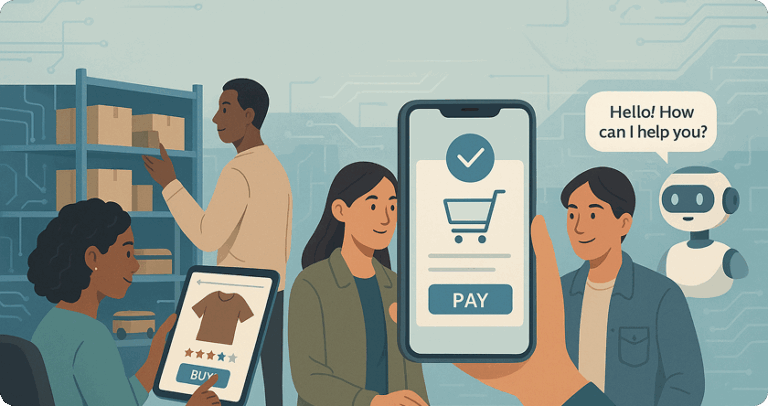












Have you noticed how shopping habits have quietly shifted from crowded malls and endless browser tabs to the palm of your hand, right inside your favorite social app? This is a fundamental change in how we experience shopping.
It’s called social commerce—where buying meets belonging, and inspiration turns instantly into action. Already, close to 40% of Americans have made purchases straight from social media in the last year. Globally, this momentum is powerful: social commerce is expected to explode to $6.2 trillion by 2030, expanding more than twice as fast as traditional online shopping.
Social commerce for customers means quicker access to trusted recommendations, transparent reviews, and a personalized shopping experience—all within spaces where they spend real time. For businesses, it offers a rare opportunity to meet people where they already gather, build authentic relationships, and grow loyalty in ways classic e-commerce can’t quite match.
In this blog, we’ll look at the forces making social commerce a pillar of modern life. We’ll explore the latest online shopping trends, the diverse types of social commerce, and the remarkable growth reshaping how we buy and sell.
What is Social Commerce?
Social commerce, at its heart, is online shopping woven right into the social networks and apps we already use every day. Imagine discovering, discussing, and buying the things you love—all within your favorite social platforms, without ever needing to jump to a separate website or app. It’s a natural extension of how we interact online: recommendations feel like friendly advice, inspiration is just a scroll away, and making a purchase can be as simple as sending a message.
To better understand how social commerce stands apart from traditional eCommerce, let’s break it down clearly:
| Traditional eCommerce | Social Commerce |
| Happens on dedicated websites or apps | Happens within social networks and apps |
| Isolated store experience, often transactional | Shopping is social—browsing, sharing, and buying blend seamlessly |
| Little community interaction; reviews from strangers | Purchases influenced by friends, creators, and real-time community feedback |
| Relies on conventional ads and search | Driven by content, influencer recommendations, live video, and peer sharing |
| Lengthy checkout process, multiple steps | One-click purchases, in-app checkout, and direct messaging with sellers |
You might not even realize how often you already experience social commerce in your daily routine.
For example, say you’re browsing Instagram and see a brand’s post featuring a must-have sweater. With Instagram Shops, you can tap to see details and check out right there, never leaving the app. Or maybe you’re on TikTok, watching a creator demonstrate a new kitchen gadget during a live video; with TikTok Shop, you simply tap a link, read honest reviews, and purchase on the spot. And on Facebook Marketplace, let’s say you stumble on a local listing for a vintage bike: you can chat, negotiate, and wrap up the sale—all without leaving your feed.
These experiences capture what makes social commerce so unique: seamless integration, trust built through social ties, and a shopping process that feels less like an errand and more like an ongoing, enjoyable conversation.
Why Is Social Commerce Growing So Fast?
As our daily routines blend social interactions with digital convenience, more and more of us are spending time on social platforms not just to catch up with friends, but to explore, get inspired, and discover products that fit our lives. Brands—big and small—are meeting us exactly where we are, transforming social feeds into vibrant marketplaces.
- It begins with our mobile-first behaviors. Smartphones are now the first place most people shop. In 2023 alone, mobile commerce sales hit a staggering $2.2 trillion, accounting for 60% of all global e-commerce sales. The trend shows that nearly half of smartphone owners now prefer shopping on mobile-first apps or sites that recommend products based on their unique preferences and behavior.
- Layer in the influence of Millennials and Gen Z, and you’ll see another powerful force propelling social commerce forward. Recent studies show that nearly 80% of Gen Z and Millennials integrate social media into their shopping journeys. Millennials, in particular, are now outpacing Gen Z in sheer number of social commerce purchases, with each group making around 20 purchases a year on average.
- But none of this would be possible without the explosion in digital payment options. Today, 75% of adults worldwide use some form of digital payment method and rely on digital wallets for fast, secure checkouts. This adoption of easy, frictionless payments makes it easier than ever for a casual scroll to turn into a confident, instant buy.
The results are stunning. The global social commerce market is projected to reach nearly $27 trillion by 2034, growing at an annual rate of over 36%. In rapidly growing markets like India and China, social commerce is ramping up even more quickly, with double-digit annual growth rates and innovative platforms setting global trends. It’s now a central part of how we discover, share, and shape our shopping choices, offering genuine convenience and new opportunities for brands and consumers alike.
Types of Social Commerce
Social commerce is far from a one-size-fits-all concept; in fact, its strength lies in the diversity of ways people can discover and purchase products where they already gather online. As social and shopping experiences fuse, here are the most prominent types of social commerce platforms:
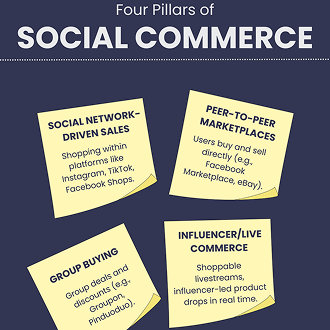
But if we look a little deeper, social commerce is the powerful effect of social recommendations and reviews. In a world overflowing with choices, shoppers increasingly rely on what honest people have to say. A single trusted review from a friend or a positive community conversation can tip a purchase decision more than a slick ad ever could. Recommendations from friends and influencers, candid feedback, and social proof all play a central role, making every purchase a little more connected and a lot more meaningful.
Key Online Shopping Trends Shaping Social Commerce
A handful of cutting-edge online shopping trends are setting the pace, turning once-novel ideas into essential features that both shoppers and brands now expect. These trends are transforming not just what we buy, but how we buy, making the future of social commerce brighter.
Here are the key trends shaping this exciting shift:
- Rise of video-first shopping and shoppable content: Platforms like TikTok, Instagram Reels, and YouTube have made short, engaging videos central to online discovery. Now, this blurs the line between entertainment and shopping in a way that feels natural and fun.
- Live-stream shopping is going mainstream: Live video events have become a primary way for brands and influencers to showcase products. Audiences can interact in real time, ask questions, and make purchases during the stream, adding excitement and direct engagement.
- AI-driven personalization and product discovery: Artificial Intelligence now powers everything from personalized product recommendations to smarter search results. Shoppers receive tailored suggestions based on their behavior, likes, and social circles, making the experience serendipitous.
- Augmented Reality (AR) and Virtual Try-ons: AR tools let you see how sunglasses, shoes, or even furniture will look in your space or on yourself, before you buy. This technology has added a layer of confidence to digital shopping, reducing returns and boosting satisfaction.
- Trust in peer recommendations vs. celebrity/influencer endorsements: While influencers still play a significant role, consumers are increasingly swayed by authentic reviews from fellow shoppers or friends. Social proof, genuine testimonials, and community discussions are now more persuasive than glossy ad campaigns alone.
- Growing integration of seamless and safe digital payments: New payment technologies allow for one-tap purchases and secure checkouts, even within social apps. With the rise of digital wallets and payment integrations, the path from discovery to purchase has become smoother than ever.
- Emphasis on sustainability and value-driven purchases: Shoppers want to support brands with shared values. Social commerce enables quick research, open discussions, and brand accountability, helping people make choices that align with their principles.
- Omnichannel and mobile-first experiences: The boundaries between in-store, online, and in-app shopping are fading. Brands are learning to meet customers wherever they are, ensuring a seamless journey from inspiration to purchase, every step of the way.
Each of these trends is making social commerce more interactive, trustworthy, and aligned with what people genuinely care about.
Opportunities and Challenges in Social Commerce
Alongside all these new trends, social commerce stands out because it delivers tangible benefits for everyone involved. For consumers, the advantages are becoming clearer every day:
- Convenience: Seamlessly browse and shop without ever leaving your favorite app.
- Effortless discovery: Find new products through friends, trending content, or recommendations tailored just for you.
- Personalized deals: Unlock special offers and suggestions based on your interests and activity.
- A vibrant sense of community: Connect, share, and even co-shop with others who have similar tastes or needs.
At the same time, for businesses, social commerce offers a broader, more authentic reach, allowing brands to engage customers directly where they already spend their time. This approach can significantly improve conversion rates, as the transition from product discovery to actual purchase is quicker and far less cluttered.
Of course, this rapid Social commerce growth isn’t without its hurdles.
- As more transactions play out across different social platforms, privacy and data security become crucial concerns. Brands need to safeguard customer information and be transparent about how data is used.
- Additionally, the sheer amount of content can sometimes lead to misinformation or untrustworthy product recommendations, making it essential for businesses to double down on authenticity and for platforms to foster a trustworthy environment.
- Managing multiple platforms, each with its quirks and audience, can be challenging for brands, requiring dedicated strategies and resources.
- Lastly, logistics and fulfillment must keep pace: customers expect swift delivery and easy returns, even when the purchase began with a single tap on a social feed.
Smartly handling these opportunities and challenges is what will define the next generation of social commerce for businesses and shoppers alike.
Practical Tips: How Consumers and Brands Can Embrace Social Commerce
As social commerce becomes a part of everyday life, both shoppers and brands have a wealth of opportunities to make the most of this new landscape. Here are some practical tips to help you get started, ensuring your experience is not just rewarding but also safe and sustainable.
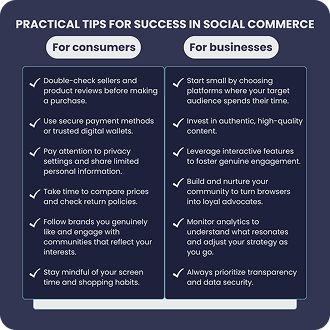
Ultimately, embracing social commerce is about making connections between people, brands, and communities, inspiring both buying and belonging. With a thoughtful approach, consumers and businesses can enjoy all the rewards this vibrant new marketplace has to offer.
Conclusion
As we wrap up, it’s clear that social commerce is already a real, growing part of our everyday lives. Shopping right from our favorite social platforms, connecting with brands and communities, and discovering new products through people we trust, that’s the direction online shopping is heading.
Think about your own experiences for a moment. Have you ever been influenced to try something new after seeing a friend’s recommendation, a creative video, or a helpful community review right in your feed? Maybe you’ve already made your first in-app purchase without even realizing how seamlessly it happened. Now is a great time to pause, notice these shifts, and explore how social commerce could make your online world a little more exciting and connected.
Like business thinker Peter Drucker said, “The best way to predict the future is to create it.” So let’s stay curious, stay connected, and enjoy the journey as social commerce continues to evolve.
FAQs
What distinguishes social commerce from traditional e-commerce?
What are the main types of social commerce platforms used today?
How is video content shaping the growth of social commerce?
What role does AI play in enhancing personalization in social commerce?
What are the biggest challenges businesses face when implementing social commerce?