











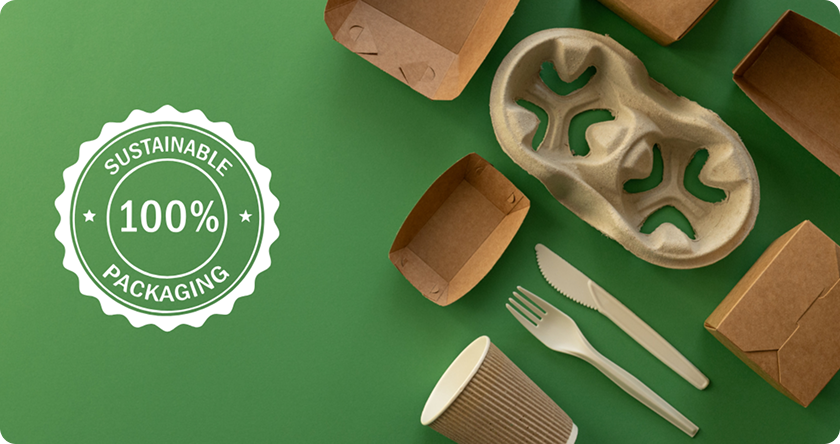

Sustainable food packaging often seems like a distant concept until you open your fridge, unwrap a sandwich, or discard last night’s takeaway box. We’re surrounded by packaging every single day, yet we rarely stop to ask: Where does all this end up?
The reality is stark. As the global food packaging market is projected to reach USD 592.8 billion by 2032, most of the material used is still designed for disposal, rather than for the planet. What’s meant to preserve freshness for days lingers in the environment for decades. We’re not just facing a waste problem; we’re facing a design problem. One that affects how we eat, shop, and think about responsibility.
This blog takes a closer look at how food packaging trends are shifting. From seaweed wraps to smart compostables, we’ll explore where eco-friendly packaging is headed—and what it means for brands, consumers, and the world we live in.
Understanding Today’s Food Packaging Landscape
Before we talk about the future, it’s worth pausing to see how we got here.

For decades, food packaging has been designed with one goal in mind: to keep food fresh, sealed, and from shelf to stomach without spoilage. Materials like plastic, aluminum, and polystyrene delivered just that—cheap, durable, and easy to mass-produce. But what they offered in convenience, they stole in sustainability. These materials don’t vanish after use. They linger in oceans, in soil, and in systems that were never built to handle this kind of volume.
The disconnect is apparent: packaging built for the short term has created long-term problems. And yet, it’s not all doom and waste. We’re now at a pivotal moment, where awareness is finally catching up with impact. Consumers are questioning, regulators are acting, and businesses are rethinking materials from the ground up.
The momentum is clear—what was once an afterthought is now being shaped by policy, technology, and rising consumer expectations, all of which are pushing the packaging industry toward something smarter and more sustainable.
What’s Driving the Shift Toward Eco-Friendly Packaging?
The shift toward eco-friendly packaging isn’t happening by chance. It’s the result of a complex mix of regulations, consumer behavior, and technological breakthroughs. As the consequences of our throwaway culture become undeniable, sustainability is no longer a trend—it’s a necessity. Governments, businesses, and consumers are all playing pivotal roles in driving change.
Here are the key forces fueling this shift:
- Government regulations and bans on single-use plastics: Countries worldwide are implementing strict bans and regulations to curb the use of harmful plastics, compelling industries to develop alternatives that are both functional and sustainable.
- Consumer demand for transparency and low-carbon choices: Shoppers are no longer passive consumers—they’re demanding transparency, seeking out brands that prioritize low-carbon and eco-friendly products to align with their values.
- Technological innovation: Advances in materials science are opening up new possibilities, from innovative packaging that extends shelf life to edible films that reduce waste at the point of consumption.
- Rise of e-commerce and demand for sustainable shipping solutions: As online shopping continues to surge, there’s increasing pressure on e-commerce brands to use sustainable, minimal packaging that’s not only eco-friendly but also cost-effective in shipping.
These forces are reshaping how packaging is designed and consumed. Still, the real innovation lies in the hands of startups and pioneers who are pushing boundaries to make packaging truly sustainable.
Innovation Spotlight: Brands Embracing Sustainable Packaging
As consumers demand more eco-friendly solutions, companies across all industries are shifting towards sustainable packaging. Research indicates that over 60% of consumers are willing to pay more for products with sustainable packaging, motivating brands to adopt more environmentally friendly practices.
Here are some impactful examples of businesses embracing sustainable packaging:
- Swiggy & Instamart (India): Online food delivery platforms like Swiggy and Instamart have made strides toward sustainability by using biodegradable packaging and recyclable containers. Swiggy has incorporated paper-based containers and compostable materials for food delivery, while Instamart has adopted cardboard boxes and eco-friendly bags, reducing reliance on plastic.
- Unilever: Unilever, a leader in the global food industry, has committed to using 100% recyclable, reusable, or compostable packaging for all its products by 2025. This includes their food brands, such as Hellmann’s and Ben & Jerry’s, where the company is reducing plastic waste by shifting to plant-based alternatives and using recycled materials for packaging.
These examples demonstrate the growing shift toward sustainability across industries, but innovation doesn’t stop there. As we look ahead, it’s clear that technological advancements and new materials will continue to reshape the future of packaging.
Key Challenges in the Eco-Friendly Packaging Transition
While the transition to eco-friendly packaging is gaining momentum, it’s not without its challenges. Retailers face several hurdles when switching to sustainable options, as they must balance cost, functionality, and consumer expectations.
Here are five key challenges:
- Eco-friendly materials are often more expensive, and scaling production to meet demand requires significant investment.
- Supply chain disruptions and a lack of availability of sustainable materials can delay the transition to greener packaging.
- Many sustainable options don’t yet offer the same shelf-life and durability as traditional materials, leading to potential product spoilage.
- Without clear instructions on disposal, consumers may mismanage eco-friendly packaging, reducing its impact.
- Achieving certifications for eco-friendly packaging can be a lengthy, costly process, adding complexity to the transition.
Despite these challenges, continued innovation and consumer education are helping retailers navigate these obstacles, making the switch to sustainable packaging more achievable.
The Role of Consumer Behavior & Brand Commitment
As consumer awareness of sustainability grows, food packaging trends are increasingly shaped by the choices consumers make. Brands are stepping up to lead the charge, taking responsibility for educating consumers on the importance of sustainable food packaging. Here’s how food brands are innovating:
- QR Codes for Disposal Instructions: Nestlé is using QR codes on its food packaging to direct consumers to recycling instructions for its paper and biodegradable packaging. This initiative ensures that consumers can properly dispose of packaging, reducing contamination in recycling streams.
- Refillable Packaging Programs: Stonyfield Farm, a leading yogurt brand, has introduced a refillable packaging program for its dairy products. Consumers can return the reusable glass containers to be refilled with fresh yogurt, thereby reducing the use of single-use plastic packaging.
- Incentivized Return Schemes: Coca-Cola has introduced an incentivized return scheme for its food and beverage products, offering rewards for recycling empty bottles and cans. This initiative is a key part of the brand’s commitment to improving the recycling rate of its eco-friendly packaging.
While consumer demand for eco-friendly packaging grows, retailers still face key challenges in making the switch. In the next section, we’ll explore these obstacles and how brands can overcome them.
Future Trends in Sustainable Food Packaging
As more brands shift towards eco-friendly packaging, the demand for the localized production of biodegradable materials is increasing. This trend aims to reduce transportation emissions and support local economies. The global biodegradable packaging market is expected to grow at a CAGR of 14.5% from 2021 to 2028.
- Smart Packaging That Detects Spoilage or Freshness: Smart food packaging is evolving beyond traditional materials. Smart labels and packaging are now equipped with sensors that can detect spoilage or changes in temperature, ensuring that food stays fresh for longer.
- Shift Toward Circular Packaging Ecosystems: The future of packaging will feature a circular model, where packaging is continuously reused and recycled, rather than being sent to landfills. Brands are designing packaging with reusability and recyclability in mind.
- AI-Powered Packaging Design Optimization: Artificial intelligence (AI) can now analyze various material options, optimize designs for minimal waste, and predict which materials will have the least environmental impact. Companies like Tetra Pak are already utilizing AI for material selection and 3D modeling to design packaging that requires fewer resources.
While these trends are shaping the future, challenges remain. Next, we’ll explore how the government bodies are shaping this shift.
How Governments and Policies Are Shaping the Shift
Governments worldwide are playing a pivotal role in shaping the future of sustainable food packaging. Through regulations, incentives, and policies, they are encouraging businesses to adopt greener solutions and promoting the reduction of packaging waste.
Here’s how governments are actively contributing:
| Country/Region | Policy/Initiative | Impact on Food Packaging |
| European Union | Single-Use Plastics Directive | Bans single-use plastics, encourages eco-friendly alternatives in food packaging |
| India | Plastic Waste Management Rules (2016) | Promotes eco-friendly packaging by banning plastic in food packaging |
| United States (California) | Circular Economy Policies | Mandate recyclable or compostable food packaging by 2030 |
Final Thoughts
As plastic food packaging fills landfills and harms food quality, the need for sustainable packaging is more urgent than ever. Consumers have the power to demand better from brands. For businesses, the shift to eco-friendly solutions is inevitable: Will you make the change and thrive, or ignore it and risk being left behind? The future of packaging depends on the decisions we make today.
FAQs
What are the most promising alternative materials replacing plastic in food packaging?
How does sustainable packaging affect food shelf life compared to traditional packaging?
What certifications or standards should consumers look for to verify eco-friendly packaging?
How are companies balancing cost and sustainability in food packaging transitions?
What role do retailers and consumers play in the effectiveness of sustainable food packaging?