













Every year, millions of people sit in doctors’ offices hoping for answers, only to leave feeling like just another number in a crowded system. This gap between “average patient” care and individualized attention is precisely what’s driving the future of healthcare forward.
Personalized healthcare is a new approach that meets people where they are, using information about their genetics, lifestyle, and health history to guide decisions from prevention to treatment. The past decade has brought a wave of healthcare innovations, such as wearable devices that track your vital signs and genetic tests that reveal which medications will work best for your body. These technical milestones are helping real people get better, faster, and with fewer side effects. As technology continues to evolve, more care is shifting from hospitals to homes, enabling truly customized support where it matters most.
It’s an exciting time to be a patient. The tools and data now available are fundamentally transforming the future of healthcare into something more thoughtful, more responsive, and more human. Let’s dive into more nitty-gritty of the future of personalized healthcare and the difference it will make in the lives of patients and families.
A New Era: What is Personalized Healthcare?
Traditional healthcare often treats patients with similar symptoms in the same way, using generalized guidelines for everyone. However, personalized healthcare gathers information unique to each person—like genetics, environment, and daily habits—to design care that fits the individual, not just the illness.
Here’s a simple comparison:
| Traditional Healthcare | Personalized Healthcare |
| Same treatment for everyone with the same diagnosis | Care tailored to your genetics, lifestyle, and preferences |
| Medicines and therapies are prescribed based on broad averages | Treatments are chosen for how well they work with your unique biology |
| The focus is on treating illness as it appears | Focus includes prevention, early detection, and long-term well-being |
| Limited consideration for differences between patients | Embraces individual differences to improve outcomes |
For better understanding, let’s take an example. In traditional medicine, two people diagnosed with high blood pressure might get the same medication. In personalized healthcare, doctors might test these patients’ genes to see which medication their bodies will respond to best, or use data from a wearable device to track whose pressure fluctuates with stress or diet.
This human-centered approach is at the heart of healthcare innovations, leading the future of healthcare, making sure that care adapts to people, instead of forcing people to adapt to care.
Why Personalized Healthcare Matters
When it comes to our health, there’s nothing more reassuring than knowing that care isn’t just effective and truly meant for us. That’s one of the biggest reasons personalized healthcare is making such an impact. By focusing on your specific needs, this approach offers several powerful benefits:
- Better Outcomes: Personalized healthcare increases the chances that treatments will work well for you. Instead of a trial-and-error process, doctors use information from your genetic makeup or health history to choose approaches most likely to help. Studies have shown that this can significantly boost recovery rates and even save lives for patients with complex illnesses like cancer or heart disease.
- Fewer Side Effects: Because therapies are selected based on what will work best with your biology, there’s less guesswork involved. That means you’re more likely to avoid unnecessary medications, adverse drug reactions, or ineffective treatments, making your path to wellness easier and smoother.
- Improved Quality of Life: When care fits like a glove, you feel the difference, not just in symptom relief, but in daily living, energy, and confidence about your health future. This can have an enormous impact, especially for those managing chronic conditions.
Personalized healthcare helps people feel seen and understood. There’s a special sense of empowerment when your doctor involves you in decisions, asks about your goals, and shapes care around what matters most to you. This approach builds trust and nurtures hope because every individual deserves care that’s as unique as their story.
Drivers Behind the Future of Healthcare
The rapid transformation we’re seeing in healthcare today is due to remarkable advances in technology.
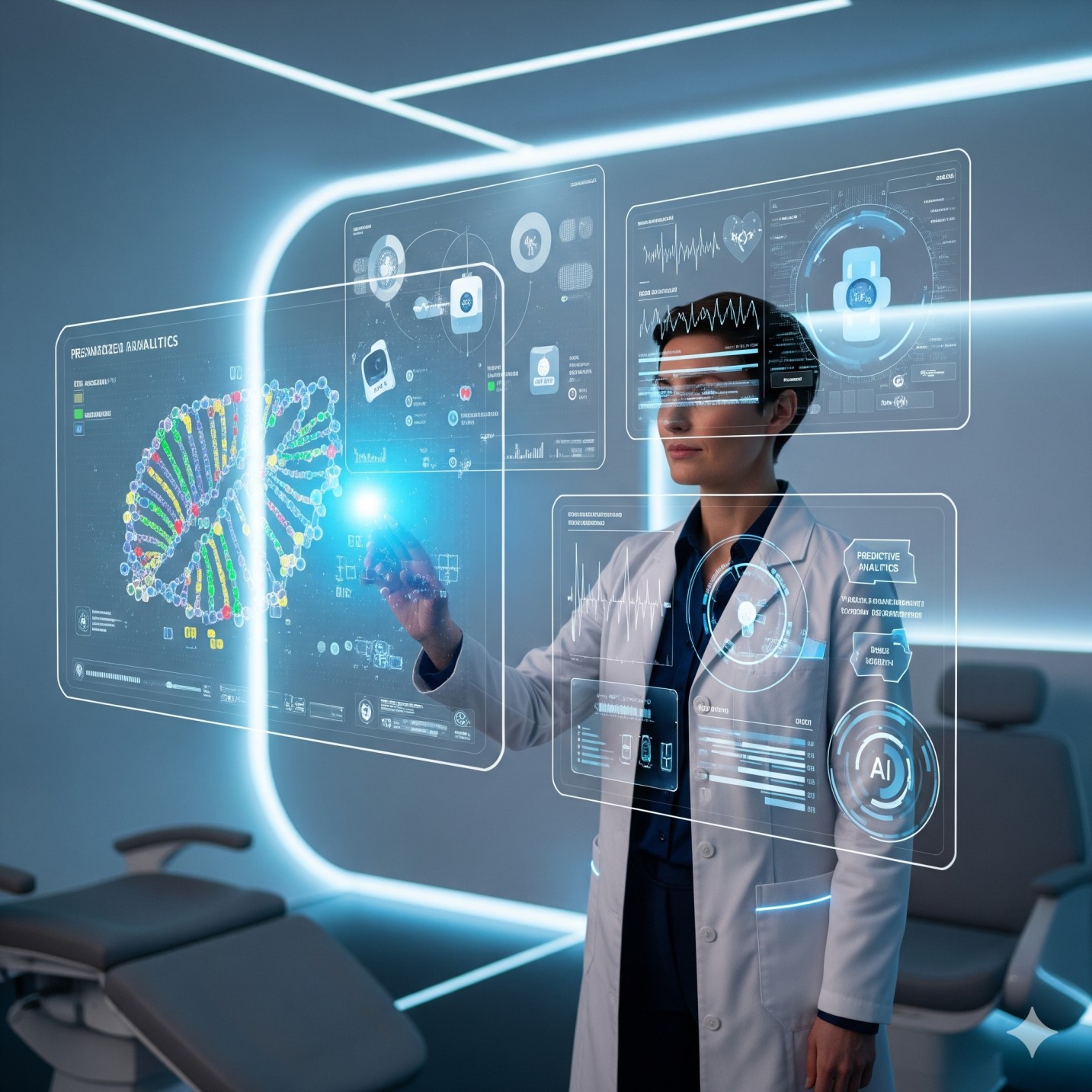
- Let’s start with Artificial Intelligence. AI now helps clinicians sift through mountains of medical data to find patterns and make more accurate diagnoses. It can read thousands of scans in seconds, flagging subtle changes that the human eye might miss. This means diseases can be detected earlier, and treatments can be started sooner.
- Big data is another game-changer. Every day, millions of data points pour in from electronic health records, wearable fitness trackers, and even social media. When combined and analyzed intelligently, this data helps healthcare teams see the bigger picture of a patient’s health.
- Genetic testing brings precision to an entirely new level. With just a small sample, doctors can now understand your genetic risks and how your body might respond to different medications. It helps to tailor treatments for cancer, rare diseases, and even some mental health conditions.
These healthcare innovations are expanding and enabling doctors to have more tools at their fingertips; patients have more personalized options than ever.
Current Innovations and Trends in Personalized Healthcare
The way we experience healthcare is evolving rapidly, and a wave of emerging technologies that are helping usher in a new era of personalized medicine. These innovations are transforming daily life for patients and clinicians alike.
Genomics
Unlocking the secrets in our DNA is one of the most significant breakthroughs of modern medicine. Genomic testing allows doctors to identify a patient’s risk for certain diseases, predict how they might respond to specific treatments, and even tailor cancer therapies to the genetic makeup of an individual’s tumor. This precision leads to better results and fewer side effects.
Wearable Health Tech
Devices like smartwatches and fitness trackers are now standard tools in health management. They continuously monitor basics like heart rate, physical activity, and sleep patterns, sending updates directly to patients and providers. This real-time data gives clinicians a clearer picture of your day-to-day health, enables quicker interventions, and helps keep you motivated toward your wellness goals.
Digital Health Records
Electronic health records streamline the sharing of medical information among providers. Patients benefit from safer, more coordinated care—no more shuffling paperwork from one office to another or worrying about missing test results. For clinicians, it means easier access to a complete medical history, which helps avoid errors and speeds up decision-making.
Predictive Analytics and Proactive Care
Advanced software now processes countless data points to forecast health risks before problems arise. Imagine being alerted to make a lifestyle change or get screened early because of subtle trends in your health data—this proactive approach is rapidly reducing hospitalizations and complications.
Virtual Health Assistants and Telemedicine
Chatbots and AI-powered assistants answer health questions at any hour, schedule appointments, and help you stick to treatment plans. Telemedicine lets you consult with a specialist from your living room, making expert care more accessible, especially for people in rural or underserved communities.
One of the most exciting trends is the integration of social and behavioral data into healthcare decisions. Beyond lab values or genetic markers, clinicians now consider factors like stress levels, daily habits, access to healthy food, and family support. This holistic view acknowledges that health is shaped by more than biology—it’s deeply rooted in how we live and interact with our world.
These healthcare innovations make patients feel more engaged and in control, with care plans that fit their real lives. Clinicians can intervene earlier, make smarter choices, and, most importantly, treat each patient as the unique individual they truly are. This is personalized healthcare in action—more accurate, more efficient, and far more humane.
Challenges to Overcome
The promise of personalized healthcare is powerful, but several key challenges must be addressed before this approach can benefit everyone equally. The main hurdles include data privacy, accessibility, and cost.
- Data privacy remains a top concern since personalized healthcare depends on collecting sensitive information—genetic, medical, and even social data. Over 60% of patients express worry about how securely their health information is protected. Ensuring robust security and clear consent policies is essential to build and maintain trust.
- Accessibility also poses a significant challenge. Many people, particularly in rural areas or lower-income communities, face limited access to digital health tools and telemedicine. About 40% of Americans lack reliable connectivity or devices needed to fully engage with these innovations, highlighting the risk of widening health disparities.
- Cost is another barrier. Cutting-edge technologies like genetic testing and specialty treatments can be expensive, raising concerns that advanced personalized care might only be available to those who can afford it.
In addition to these practical obstacles, ethical considerations are crucial for the future of healthcare. Important questions include:
- Who owns and controls personal health data?
- How do we prevent bias in AI algorithms?
- Are diverse populations fairly represented in research and treatments?
Addressing these challenges requires collaboration among patients, providers, innovators, and policymakers. With thoughtful solutions, personalized healthcare can grow in a way that respects privacy, expands access, manages costs, and upholds ethical principles, making truly individualized care available and safe for everyone.
How to Prepare: What Patients and Families Can Do Now
As personalized healthcare continues to evolve, patients need to be proactive. Being proactive not only helps you get the most from emerging healthcare innovations but also puts you in the driver’s seat when it comes to your well-being.
Here are some practical tips to help you stay informed and advocate for personalized care options:
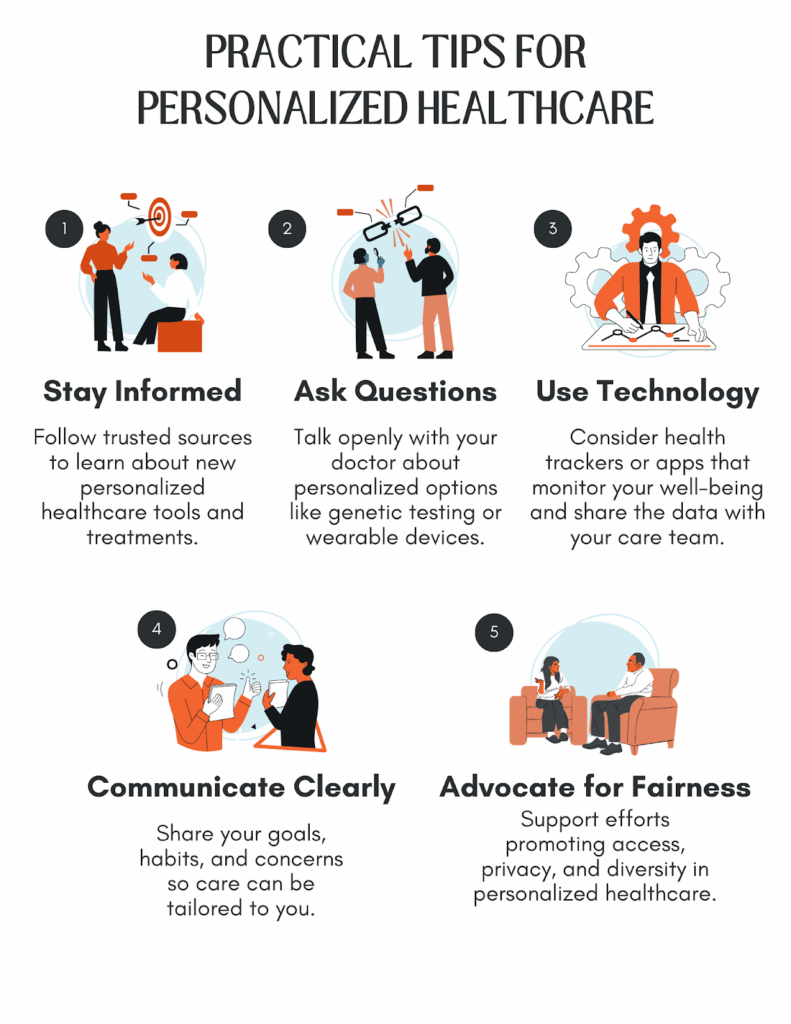
With these practical tips, patients and families can move beyond being passive recipients of care, becoming active partners who help shape the future of healthcare.
Conclusion
As we stand at the edge of extraordinary change in healthcare, it’s worth taking a moment to reflect on how far we’ve come. Personalized healthcare offers more than new tools or treatments; it brings hope for a system that truly sees and values each individual.
The horizon is bright, with ongoing healthcare innovations leading us toward care that is compassionate and responsive to everyone’s unique needs. There’s genuine excitement in knowing that the future of healthcare means fewer one-size-fits-all solutions and more care that is thoughtfully tailored, empowering patients and families every step of the way.
Let’s look forward with hope, knowing that a more personalized, human-centered approach to health is indeed on the horizon—and it’s here to stay.
FAQs
How does personalized healthcare improve preventive care?
What technologies are driving the rise of personalized healthcare outside of hospitals?
How can patients ensure their personal health data is protected in personalized healthcare?
What are the potential ethical concerns related to AI in personalized healthcare?
How accessible is personalized healthcare to underserved communities?