



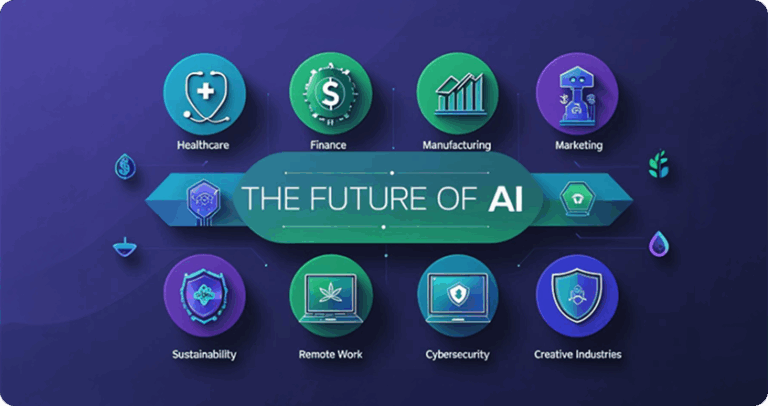
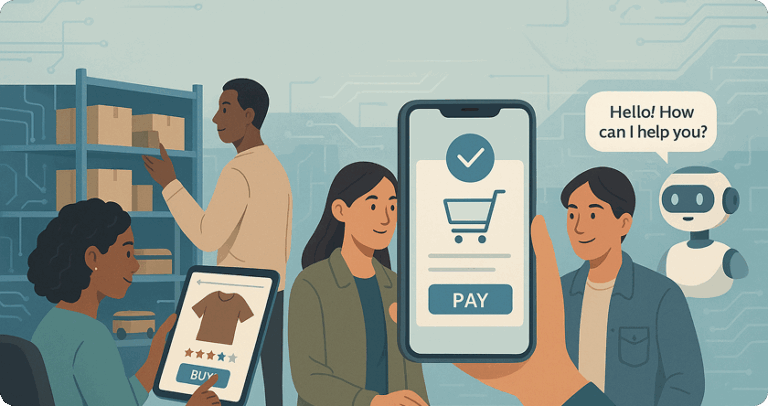







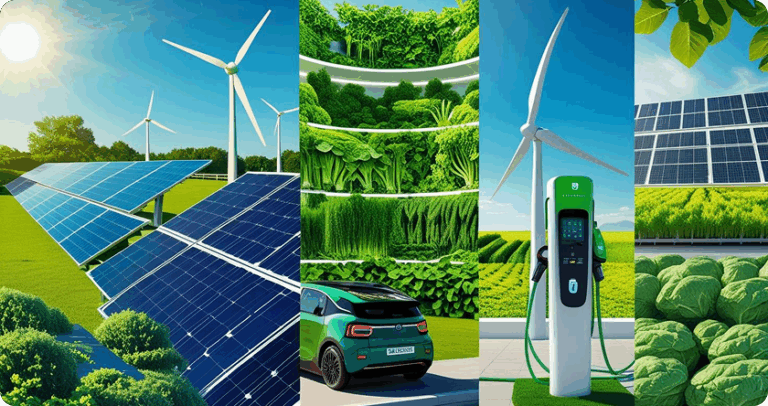


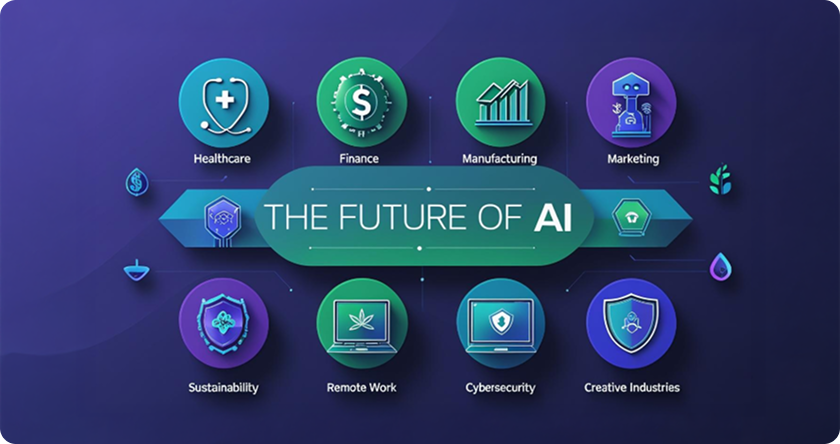

As we approach 2025, industries worldwide are bracing for an AI-driven transformation that promises to redefine how we work, interact, and innovate. The significance of artificial intelligence in every sector is no longer a futuristic vision—it’s unfolding before our eyes. With Artificial Intelligence at the forefront, businesses now have access to tools that can streamline operations, enhance decision-making, and predict trends with unparalleled precision. It’s not just about automation; it’s about unlocking new opportunities, improving efficiency, and transforming customer experiences.
In fact, by 2025, the global AI market is expected to reach $190.61 billion, growing at a compound annual growth rate (CAGR) of 36.7% from 2021. The convergence of rapidly advancing machine learning algorithms, increased computing power, and vast datasets will empower industries to leverage AI in once unimaginable ways. From healthcare advancements to financial forecasting, AI is poised to be a game-changer in numerous fields. The widespread adoption of AI solutions is fast approaching, and those who integrate them now will undoubtedly gain a competitive edge.
AI isn’t on the horizon anymore—it’s already reshaping how businesses operate, compete, and grow. The real question isn’t if you should adopt AI, but how fast you can move. Waiting for the “perfect time” is no longer a strategy—it’s a risk. From streamlining workflows to transforming customer experiences, AI is becoming the engine behind smarter, faster, and more agile organizations. By 2025, AI will be embedded in the DNA of forward-thinking companies. Those who act now won’t just adapt—they’ll lead the future.
AI’s impact is already evident in fields like healthcare, where AI-powered diagnostics are enhancing disease diagnosis with greater precision. For industries yet to embrace AI, now is the time to understand how it will reshape business, add value across sectors, and why 2025 will be pivotal for AI integration. The opportunity to redefine operations and unlock new potential is here, driven by AI.
In the following sections, we will examine how AI is expected to impact every industry by 2025.
AI in Healthcare: Revolutionizing Patient Care
Artificial Intelligence is no longer a futuristic concept—it’s actively reshaping the way care is delivered. In today’s healthcare landscape, AI is driving a shift from reactive treatments to proactive, personalized care. Whether it’s enhancing diagnostic precision, creating tailored treatment plans, or enabling predictive insights, AI is unlocking new possibilities that were once out of reach. This isn’t just about faster processes—it’s about smarter, more responsive care.
As AI becomes more deeply embedded in healthcare systems, we’re stepping into a future where technology and empathy work hand in hand—delivering care that’s not only more efficient, but profoundly human.
As you explore how AI is shaping healthcare, you’ll discover how it enhances outcomes, saves time, and redefines what’s possible. Here’s how AI is making a tangible difference, and why its adoption is critical for shaping the future of patient care.

AI is making personalized medicine more achievable than ever before. With AI’s ability to analyze vast amounts of data, healthcare providers can now craft tailored treatment plans that meet the unique needs of each patient. This approach ensures more effective treatments, fewer side effects, and faster recovery.
- Data Integration: AI analyzes data from genetics, medical records, and lifestyle factors to inform its decisions.
- Better Outcomes: Personalized care that is more effective and faster.
- Proactive Treatment: AI anticipates complications before they arise, adjusting treatments accordingly.
By focusing on precision medicine, AI helps deliver healthcare that is more aligned with a patient’s unique genetic profile, medical history, and current condition. AI-powered personalization is changing the way we treat chronic diseases and age-related health issues, making healthcare more efficient and accessible.
AI in Diagnostics and Treatment Planning
AI is enabling faster and more accurate diagnostics, ultimately leading to better treatment planning. By analyzing data and recognizing patterns, AI tools can identify conditions like cancer, heart disease, and neurological disorders, often at an earlier stage than human doctors.
- Faster Diagnoses: AI analyzes radiology and pathology data quickly.
- Improved Accuracy: AI outperforms traditional methods in many diagnostics.
- Treatment Strategies: AI creates data-driven treatment plans based on real-time information.
AI not only improves diagnostic accuracy but also allows doctors to make better, faster decisions for treatment planning, transforming the healthcare process into one that is more proactive rather than reactive. This shift is enhancing the overall quality of care patients receive.
Predictive Analytics for Better Patient Outcomes
AI-driven predictive analytics is revolutionizing how healthcare professionals anticipate patient needs, enabling early intervention and disease prevention before they become critical.
- Anticipating Risks: AI analyzes patient data to predict future health conditions.
- Proactive Care: Early intervention to prevent complications.
- Data-Driven Insights: Optimizing treatment based on predictive models.
By leveraging predictive analytics, doctors can reduce hospital readmissions, improve chronic disease management, and enhance patient outcomes. This proactive approach is helping healthcare providers not only respond to patient needs but also predict and address them well in advance, making healthcare more innovative and more effective.
AI in Finance: Transforming Financial Services
The financial services industry is undergoing a profound transformation, with artificial intelligence at its heart. From improving trading strategies to enhancing risk management and delivering more personalized financial services, AI is reshaping the landscape. Financial institutions that adopt AI today are preparing themselves for a future where efficiency and accuracy are paramount. Whether it’s through algorithmic trading, fraud prevention, or tailored financial advice, AI is giving the finance sector the tools it needs to stay ahead in an increasingly competitive market.
As AI in industries continues to evolve, its potential for the finance industry becomes increasingly apparent. The following sections will examine how AI is revolutionizing financial services and the benefits it brings to both institutions and their customers.
Algorithmic Trading and Risk Management
In the fast-paced world of finance, AI-driven algorithmic trading is changing the game. By analyzing vast amounts of data, AI can identify patterns and execute trades more quickly and accurately than human traders ever could. This automation enables investors to maximize profits while effectively managing risks.
- Faster Execution: AI algorithms can make decisions in milliseconds, allowing traders to capitalize on short-term market fluctuations.
- Data-Driven Decisions: AI evaluates historical and real-time data to predict market movements, reducing human error.
- Optimized Risk Management: AI models assess and adjust risks in real-time, helping traders maintain a balanced portfolio.
With the ability to process vast amounts of information in a fraction of a second, AI empowers financial institutions to make smarter, more informed decisions, optimizing trading strategies and mitigating risk. The future of trading lies in these AI-driven systems that enhance both profitability and stability.
AI in Fraud Detection and Prevention
Fraud is one of the biggest challenges the financial sector faces, but AI is emerging as a powerful tool in the fight against it. With its ability to analyze transactions in real-time, AI can detect unusual patterns and prevent fraudulent activities before they happen.
- Real-Time Monitoring: AI systems continuously monitor transactions, instantly flagging any suspicious activity.
- Anomaly Detection: Machine learning algorithms identify deviations from normal behavior, enabling faster detection of potential fraud compared to traditional methods.
- Adaptive Systems: AI evolves with new threats, learning to identify emerging fraud tactics and ensuring that financial institutions stay one step ahead.
By leveraging machine learning and predictive algorithms, financial institutions can significantly reduce their exposure to fraudulent activities. With AI-powered fraud detection, banks and financial services are enhancing security while providing customers with peace of mind.
The Role of AI in Personalized Banking and Wealth Management
AI is also transforming personalized banking and wealth management by delivering tailored experiences and advice that align with each client’s unique needs and financial goals. AI’s ability to analyze customer data allows banks and wealth managers to offer personalized investment strategies, savings plans, and financial recommendations.
- Customized Financial Advice: AI analyzes client profiles, preferences, and goals to offer bespoke financial solutions.
- More innovative Wealth Management: AI-powered tools provide real-time portfolio adjustments based on market conditions, helping clients stay on track to meet their financial goals.
- Enhanced Customer Experience: Banks can utilize AI to deliver personalized services, ranging from chatbots that answer questions to intelligent assistants that provide tailored recommendations.
By adopting AI, banks and wealth management firms can enhance customer engagement and satisfaction, ensuring that their clients receive the best possible financial advice and guidance. AI makes financial planning more accessible, efficient, and highly customized to individual needs.
AI in Manufacturing: The Era of Smart Factories
The manufacturing industry is experiencing a revolution thanks to artificial intelligence. As technology evolves, smart factories are becoming a reality, where every machine, system, and process is interconnected, powered by AI. This transformation is more than just an upgrade to old systems; it’s a game-changing shift that brings efficiency, precision, and speed to new levels. AI is enabling manufacturers to optimize production, improve quality control, and predict maintenance needs, resulting in smoother, faster, and more cost-effective operations.
In the following sections, we’ll explore how AI is reshaping manufacturing, from automation in production lines to predictive maintenance, offering insights into how AI is shaping the future of manufacturing.
Let’s explore the potential of AI in transforming production processes, streamlining operations, and enhancing profitability.
Automation in Production Lines
AI-powered automation is at the heart of smart factories, revolutionizing the operation of production lines. With AI systems automating repetitive tasks, manufacturers can enhance productivity, minimize human error, and achieve greater consistency across the board. The ability of AI to analyze data in real time allows for faster adjustments to the production process, ensuring minimal downtime and optimal output.
- Optimized Workflow: AI enables seamless integration of machines and systems, creating more synchronized and efficient operations.
- Enhanced Precision: Automated production ensures higher accuracy and fewer defects in manufactured goods.
- Reduced Costs: Automation reduces labor costs and increases operational efficiency, thereby lowering production expenses.
AI-driven automation doesn’t just speed up processes; it makes them more intelligent, ensuring that production lines are running at their peak potential. By integrating innovative technologies, manufacturers can stay ahead of the competition, meet market demands, and scale operations with ease.
AI in Quality Control and Supply Chain Management
AI is also revolutionizing quality control and supply chain management, providing manufacturers with the tools to track products at every stage of production and ensure they meet the highest standards. AI systems can monitor products for defects, conduct real-time inspections, and provide actionable insights, allowing for immediate corrections. This ensures that quality is maintained throughout the entire manufacturing process.
- Real-Time Monitoring: AI tracks and analyzes data throughout production, identifying potential quality issues before they affect the end product.
- Predictive Insights: AI anticipates disruptions in the supply chain, helping manufacturers to take proactive measures.
- Optimized Logistics: AI improves supply chain efficiency by predicting demand and adjusting production schedules accordingly.
With AI-powered quality control, manufacturers can significantly reduce defects, ensuring that customers receive products of the highest quality, while also optimizing their supply chains for improved speed and cost-effectiveness. The future of AI in business enables it to remain agile, adaptable, and prepared to meet the demands of the modern market.
The Future of AI in Predictive Maintenance
Predictive maintenance is one of the most promising applications of AI in the manufacturing industry. Instead of waiting for equipment to break down, AI systems continuously monitor machinery and predict failures before they happen. By utilizing data collected from sensors and historical performance, AI can predict when equipment will require maintenance, thereby reducing downtime and ensuring uninterrupted production.
- Minimized Downtime: AI predicts when machines are likely to fail, enabling scheduled maintenance rather than emergency repairs.
- Cost Savings: Early detection of issues reduces repair costs and prevents the need for costly equipment replacements.
- Optimized Asset Lifespan: AI ensures that machinery is maintained in optimal condition, extending its useful life.
By leveraging predictive analytics, manufacturers can increase operational efficiency, reduce unexpected breakdowns, and lower maintenance costs. AI enables manufacturers to take control of their maintenance schedules, ensuring maximum productivity with minimal interruptions.
AI in Marketing: Driving Customer-Centric Strategies
The marketing landscape is evolving rapidly, and artificial intelligence is at the forefront of this transformation. AI is enabling brands to create more personalized, data-driven strategies, revolutionizing their interactions with customers. By leveraging AI, businesses can now deliver hyper-targeted marketing campaigns that speak directly to individual consumer needs, preferences, and behaviors. Whether through personalized recommendations or automated interactions, AI is allowing brands to move from one-size-fits-all marketing to tailored, dynamic experiences that resonate deeply with their audiences.
In the following sections, we’ll explore how AI is transforming marketing strategies, driving customer engagement, and creating meaningful experiences that foster stronger customer relationships.
Personalized Marketing Through Machine Learning
Personalized marketing has never been more effective, thanks to the advancements in AI and machine learning. By analyzing vast amounts of customer data—from past purchases to browsing behavior—AI can craft customized marketing messages that resonate with each individual. This personalized approach leads to higher engagement, more conversions, and stronger customer loyalty.
- Dynamic Content Creation: AI analyzes customer preferences and behaviors to tailor content to specific segments, ensuring that every interaction is relevant and timely.
- Predictive Targeting: Machine learning models predict which customers are most likely to engage with particular products or services, allowing brands to target their efforts more effectively.
- Enhanced Customer Journey Mapping: AI tracks customer interactions across all touchpoints, ensuring that messaging is consistent and aligned with their interests and needs.
By using personalized AI-driven marketing, businesses can not only increase conversion rates but also foster stronger relationships with customers, delivering the right message at the right time. With machine learning, the customer journey is optimized, making every marketing effort more impactful and efficient.
AI-powered Content Creation and Optimization
AI is changing the way content is created and optimized, making it more efficient and effective. Through advanced natural language processing (NLP) algorithms, AI can generate and optimize content at scale, ensuring that it’s tailored to the specific needs of the audience while maintaining high quality.
- Automated Content Generation: AI tools can create articles, blogs, and social media posts in a fraction of the time it would take a human writer, making content creation faster and more scalable.
- SEO Optimization: AI algorithms can analyze which keywords are most likely to drive traffic and optimize content accordingly, improving organic search rankings.
- Real-time Content Adjustments: AI continuously monitors content performance, automatically adjusting headlines, keywords, and formatting to enhance engagement.
With AI-powered content creation, brands can streamline their content strategy, ensuring that every piece of content is aligned with customer interests and optimized for search engines. This not only saves time but ensures that marketing teams can focus on higher-level strategies while leaving content generation and optimization to AI.
Chatbots and AI-driven Customer Service
Customer service is another area where AI is making a huge impact. Chatbots and AI-driven customer service platforms are revolutionizing how businesses handle customer inquiries, offering real-time support that’s available 24/7. By leveraging AI, businesses can handle a large volume of customer interactions without sacrificing quality, ensuring that customers receive timely and accurate responses.
- Instant Responses: AI chatbots provide customers with quick, automated responses to common questions, ensuring that no customer query goes unanswered.
- Personalized Assistance: AI can analyze customer data to provide personalized recommendations and solutions tailored to their previous interactions and preferences.
- Efficient Issue Resolution: AI-powered systems can identify issues more quickly and route more complex problems to human agents, thereby improving overall response time and customer satisfaction.
By integrating AI-driven chatbots into their customer service strategies, businesses can enhance customer satisfaction, decrease response times, and lower operational expenses. AI ensures that every interaction is as efficient and effective as possible, while also enabling the scaling of customer service without requiring additional staff.
AI in Sustainability: Tackling Climate Change and Resource Management
The urgency to tackle climate change and optimize resource management has never been greater, and artificial intelligence is emerging as a crucial ally in these efforts. By harnessing the power of AI, industries and governments are discovering more innovative and efficient ways to address the world’s most pressing environmental challenges. AI is enabling businesses to make data-driven decisions that minimize waste, optimize energy usage, and predict the impact of climate change. The shift to sustainable practices is no longer just a goal—AI is actively helping to make it a reality.
In the following sections, we’ll explore how AI is transforming sustainability across various sectors, driving energy efficiency, reducing waste, and providing better predictions for future climate scenarios.
Let’s explore the significant role AI plays in combating climate change and promoting sustainable practices.
AI in Energy Management and Optimization
One of AI’s most significant impacts on sustainability is in energy management. AI algorithms analyze vast amounts of data from energy grids, smart meters, and even weather patterns to optimize energy distribution and usage in real time. This leads to significant reductions in energy waste, as well as more effective energy consumption strategies across industries and residential sectors.
- Smart Energy Grids: AI can predict energy demand and adjust distribution to prevent energy loss, ensuring efficient use of resources.
- Demand Response Systems: AI helps reduce peak demand by shifting energy usage to off-peak times, reducing stress on the grid, and lowering costs.
- Energy Efficiency: AI optimizes the performance of renewable energy sources, such as solar and wind, by predicting energy production patterns based on weather conditions.
By using AI to optimize energy management, industries can achieve greater sustainability while also reducing operational costs. The future of energy lies in AI-driven systems, which ensure that energy resources are used more efficiently, minimize waste, and promote environmental responsibility.
Leveraging AI for Waste Reduction and Recycling
Waste reduction is a key pillar of sustainable development, and AI is providing powerful tools to enhance recycling processes and minimize waste. AI systems can analyze and categorize waste materials, identify reusable components, and improve recycling rates by sorting materials more accurately than human workers.
- Smart Waste Management: AI assists in automatically sorting waste, enhancing recycling efficiency, and minimizing contamination in recycling streams.
- Waste Tracking and Optimization: AI monitors waste generation in real-time, providing insights that help businesses reduce excess production and minimize material waste.
- Recycling Efficiency: AI identifies valuable materials in waste, ensuring they are appropriately recycled, reducing landfill usage, and promoting circular economy practices.
With AI, industries can not only reduce their waste footprint but also create a closed-loop system that reuses and recycles materials. This technological innovation is helping companies worldwide achieve their zero-waste goals and significantly reduce their environmental impact.
AI-powered Climate Change Prediction Models
AI’s ability to process massive datasets and identify patterns makes it a valuable tool for predicting climate change. By analyzing data from satellites, weather stations, and climate models, AI can predict the long-term effects of climate change and provide insights on how to mitigate its impacts best. These predictions are crucial for governments and organizations to plan for a sustainable future and make informed decisions about resource allocation.
- Climate Modeling: AI aids in creating more accurate climate models, which simulate future climate scenarios and potential impacts on regions, ecosystems, and economies.
- Disaster Prediction: AI models predict the likelihood of extreme weather events, such as hurricanes, droughts, and heatwaves, enabling better preparedness.
- Environmental Impact Forecasting: AI predicts the impact of industrial activities on local environments, enabling businesses to reduce their ecological footprint.
By leveraging AI-powered climate change predictions, governments and companies can better prepare for future environmental challenges, make more intelligent policy decisions, and align with sustainability goals. AI’s role in climate change mitigation is pivotal for protecting the planet and ensuring a sustainable future.
AI in Remote Work: Enhancing Collaboration and Productivity
The shift to remote work has introduced new challenges for businesses, from ensuring seamless collaboration to maintaining productivity. Fortunately, artificial intelligence is providing the solutions that organizations need to keep remote teams connected, focused, and efficient. By leveraging AI, companies can optimize workflows, streamline communication, and enhance decision-making—all while fostering a sense of connection among distributed teams.
As we dive deeper into this section, we’ll explore how AI is transforming remote work, from virtual assistants and predictive tools to AI-driven decision-making platforms. AI isn’t just making remote work easier; it’s boosting productivity, improving collaboration, and allowing teams to work smarter, not harder.
AI-driven Virtual Assistants for Remote Teams
One of the most effective applications of AI in remote work is the AI-driven virtual assistant. These smart tools are designed to help remote teams stay organized, manage schedules, and handle routine tasks, allowing team members to focus on higher-value activities. Virtual assistants are becoming indispensable for improving time management and streamlining daily operations.
- Task Automation: Virtual assistants handle routine tasks such as scheduling meetings, setting reminders, and responding to common queries, freeing up valuable time for more critical work.
- Intelligent Scheduling: AI assistants automatically manage team calendars, coordinate meetings across time zones, and prioritize tasks, ensuring that everyone is on the same page.
- Enhanced Collaboration: Virtual assistants integrate with communication platforms like Slack, Teams, or Zoom, facilitating smooth interaction and information sharing among remote team members.
With AI-powered virtual assistants, remote teams can boost their productivity by reducing administrative overhead and allocating more time to strategic and creative tasks. These assistants are an essential tool for making remote work more efficient, especially in today’s fast-paced digital environment.
Predictive AI Tools for Workflow Optimization
AI’s ability to analyze large datasets and identify patterns is incredibly valuable when it comes to optimizing workflows. Predictive AI tools use data from past work patterns to anticipate future needs and suggest the most efficient paths forward, ensuring that teams can maintain high levels of efficiency even while working remotely.
- Workflow Analysis: AI tools analyze team performance, pinpointing bottlenecks and inefficiencies in workflows, helping managers streamline operations.
- Smart Task Assignment: AI predicts the skills and resources required for each task, automatically assigning tasks to team members based on their expertise and availability.
- Real-time Optimization: AI systems continuously monitor ongoing projects, making adjustments in real-time to ensure tasks are completed on time and in the most efficient manner possible.
By utilizing predictive AI tools, remote teams can optimize their workflows, eliminate redundant processes, and ensure that they’re using their time and resources most effectively. These tools empower teams to work more strategically, making remote collaboration not just possible but incredibly practical.
AI-powered Decision-making Platforms for Remote Leadership
Leadership in a remote environment can be challenging, particularly when decisions must be made quickly and accurately. AI-powered decision-making platforms are providing remote leaders with the tools they need to make data-driven decisions that positively impact their teams and organizations.
- Data-driven Insights: AI systems analyze key performance indicators (KPIs), project timelines, and team progress to provide leaders with actionable insights, guiding decision-making.
- Real-time Analysis: AI tools continuously monitor the work environment, providing real-time feedback on team engagement, project health, and potential risks.
- Optimized Strategy: AI enables leaders to predict outcomes based on various strategies, allowing them to choose the best course of action for their teams and stakeholders.
With AI-driven decision-making platforms, remote leaders can make faster, more informed decisions, ensuring that their teams remain aligned and productive even in a virtual environment. These platforms not only support leadership but also encourage strategic growth in the remote work landscape.
AI in Cybersecurity: Defending Against the Future’s Threats
In an increasingly digital world, the threat landscape is evolving rapidly, and so must our defenses. Artificial intelligence is revolutionizing cybersecurity by providing real-time detection, smarter threat mitigation, and adaptive defenses against an increasingly diverse range of cyberattacks. AI is not just a tool for responding to threats—it’s a proactive solution that anticipates, identifies, and neutralizes risks before they can cause significant harm. As cyberattacks become increasingly sophisticated, AI is emerging as the ultimate defender against future threats.
In this section, we’ll explore how AI is transforming cybersecurity, from threat detection to vulnerability mitigation, and how machine learning is continuously evolving to stay ahead of hackers and malicious actors. Let’s look at how AI is securing our digital future.
AI for Threat Detection and Real-time Response
AI’s ability to process and analyze vast amounts of data at lightning speeds is what makes it so effective in threat detection. AI can analyze network traffic, identify unusual patterns, and instantly flag potential risks. This real-time response is crucial for preventing cyberattacks before they escalate, as AI systems can detect threats more quickly and accurately than human analysts.
- Real-time Threat Identification: AI continuously monitors systems, analyzing behavior to detect anomalies and potential attacks.
- Automated Response: AI-driven systems can automatically take action, such as blocking suspicious IP addresses, to prevent further damage.
- Proactive Defense: Instead of reacting to breaches, AI anticipates attack vectors based on historical data, shutting down potential threats before they develop.
By incorporating AI-powered threat detection and response mechanisms, organizations can not only react more quickly to cyberattacks but also prevent them from causing extensive damage. The result is a more resilient and secure system that’s always vigilant against potential threats.
AI in Identifying and Mitigating Vulnerabilities
Every system has vulnerabilities, but AI is helping organizations identify and mitigate these risks long before they can be exploited. AI tools continuously scan for weak points in networks, applications, and infrastructure, providing a comprehensive vulnerability assessment.
- Automated Scanning: AI performs frequent scans, identifying potential vulnerabilities and weaknesses in real-time.
- Predictive Vulnerability Assessment: AI can forecast where vulnerabilities are likely to occur, based on data patterns and historical breaches, and suggest corrective actions.
- Rapid Patch Deployment: AI accelerates the process of deploying patches or fixes, ensuring that vulnerabilities are addressed before they can be exploited.
With AI-driven vulnerability management, businesses can maintain stronger security postures by addressing risks before they lead to breaches. These intelligent systems enable continuous monitoring and proactive threat mitigation, ensuring that all systems are up to date and resilient against the latest cyber threats.
The Role of Machine Learning in Evolving Cybersecurity Defenses
Machine learning (ML), a subset of AI, plays a critical role in the evolution of cybersecurity defenses. Unlike traditional security measures, which rely on static rules and patterns, machine learning enables systems to learn from past cyberattacks and improve their responses over time. This makes ML an essential tool in the evolving landscape of cybersecurity, where threats are constantly changing.
- Adaptive Defenses: ML models continuously evolve, adapting to new attack techniques and refining their detection and response capabilities.
- Anomaly Detection: By analyzing massive datasets, ML can identify previously unseen threats or vulnerabilities that would be difficult for human analysts to catch.
- Intelligent Threat Prevention: As ML systems learn from more data, they improve their accuracy in distinguishing between legitimate activity and malicious behavior, reducing false positives.
Machine learning’s ability to adapt to new cyber threats is what makes it such a powerful ally in the battle for digital security. As cybercriminals become more sophisticated, ML-powered defenses will be critical in staying one step ahead.
AI in Creative Industries: Augmenting Human Imagination
The creative industries are undergoing a wave of transformation as artificial intelligence (AI) emerges at the intersection of creativity and technology. From music composition to literary works and even visual arts, AI is amplifying human imagination, enabling creators to push boundaries and explore new forms of artistic expression. Far from replacing human talent, AI is acting as a collaborative tool, empowering artists, musicians, and writers to enhance their work with unprecedented precision and insight.
In this section, we will dive into how AI is augmenting creativity in various artistic fields, from content creation to storytelling, and how it’s transforming the way creative professionals collaborate. By embracing AI, the creative process becomes not only more efficient but also more exciting, as it opens new doors to innovation.
AI in Content Creation: Art, Music, and Literature
AI is revolutionizing content creation, blending human imagination with machine precision. In the fields of art, music, and literature, AI is not just a tool for automation but a creative partner that pushes the boundaries of what is possible. By analyzing vast amounts of data and recognizing patterns, AI can generate original works of art, compose music, and even write novels or poetry.
- Art Creation: AI algorithms like DeepArt and DALL-E create stunning visual art, often in styles that mimic famous artists or entirely new aesthetics.
- Music Composition: AI tools such as OpenAI’s Jukedeck or Amper Music compose original music, offering musicians new tools for experimentation and inspiration.
- Literary Creation: AI is being utilized to craft stories, poems, and even screenplays, with some authors collaborating with AI to generate original narratives, dialogue, and plots.
By combining human input with AI-generated creativity, content creators can enhance their projects, finding new inspiration and creative direction they may not have otherwise explored. AI is unlocking new realms for creative professionals, making the creation of art, music, and literature a more dynamic and collaborative process.
The Future of AI-driven Storytelling and Entertainment
Storytelling and entertainment are at the cusp of a dramatic shift, thanks to AI. From interactive narratives to personalized experiences, AI is helping storytellers craft deeper, more engaging stories that resonate with diverse audiences. AI can analyze viewer preferences and create dynamic storylines that adapt based on user interaction, resulting in more immersive and personalized entertainment experiences.
- Interactive Storytelling: AI is powering platforms like Netflix and Hulu, where algorithms suggest content based on user preferences, while also helping create personalized viewing experiences.
- Dynamic Narratives: AI-driven platforms allow users to influence the plot in video games and interactive films, making entertainment more personalized.
- AI in Film Production: AI tools assist with scriptwriting, casting decisions, scene composition, and editing, making film production faster, more cost-effective, and more innovative.
In the future, AI-driven storytelling could usher in a new era of entertainment, where content adapts to the audience, offering a more personalized, immersive, and dynamic experience. This shift allows creators to experiment with new narrative structures, making storytelling more engaging and accessible.
How AI is Transforming Creative Collaboration
AI is not just a tool for individual creators; it’s also transforming creative collaboration. Teams of artists, writers, and musicians are utilizing AI to enhance their collaborative work, improving both the creative process and the final product. AI can streamline the creative workflow, offer suggestions, and even generate ideas that spark innovation.
- Collaborative Tools: AI-powered platforms enable creators to collaborate remotely, providing real-time feedback and assistance for designs, music tracks, or scripts.
- Idea Generation: AI offers suggestions, generates concepts, and even predicts market trends, helping creators stay ahead of the curve.
- Efficiency in Production: By automating repetitive tasks such as editing or image refinement, AI frees up creative professionals to focus on higher-level aspects of their work, making collaboration more productive.
AI empowers creative teams to work smarter, not harder. By enhancing communication, idea generation, and workflow, AI is helping artists collaborate in ways that increase productivity and drive innovation. This makes creative collaboration more dynamic, fluid, and accessible, paving the way for new forms of team-based creativity.
Ethical Considerations and Challenges in AI Development
As AI technology rapidly advances, it raises significant ethical concerns regarding fairness, transparency, and accountability. These challenges must be addressed to ensure the responsible and inclusive development of AI.
- Bias in AI: AI systems may inherit biases from the data they are trained on, resulting in unfair outcomes in areas such as hiring, lending, and law enforcement.
- Data Privacy: Ensuring that personal data used by AI systems is collected, stored, and utilized responsibly while adhering to privacy regulations like GDPR.
- Transparency: The need for AI decisions to be explainable and understandable, especially in high-stakes sectors like healthcare and finance.
- Job Displacement: AI-driven automation could lead to job losses, requiring reskilling initiatives to support displaced workers.
- Accountability: Defining who is responsible when AI systems cause harm or errors, whether it’s the developers, the deploying organizations, or the AI itself.
Addressing these ethical challenges is crucial for the future development of AI that benefits society while minimizing harm.
Conclusion: AI as a Catalyst for Industry Evolution
AI is no longer just a buzzword—it is rapidly becoming the backbone of innovation across industries. From transforming healthcare with personalized treatments to optimizing financial services through algorithmic trading, AI is enabling businesses to operate more intelligently, efficiently, and effectively. As we approach 2025, industries that embrace AI will not only stay competitive but will thrive in a landscape that demands agility and forward-thinking. The future of AI is here, and it’s shaping every sector, from manufacturing to marketing, cybersecurity, and beyond. Now is the time for industries to adopt AI, unlock its full potential, and build a more innovative, efficient, and sustainable future.
FAQs
What are the key challenges in scaling AI solutions across different industries?
How do small businesses compete with larger organizations in AI adoption?
How will AI impact global supply chains and logistics by 2025?
What regulatory frameworks will emerge around AI by 2025?
What role will AI play in reshaping customer support and service industries?