











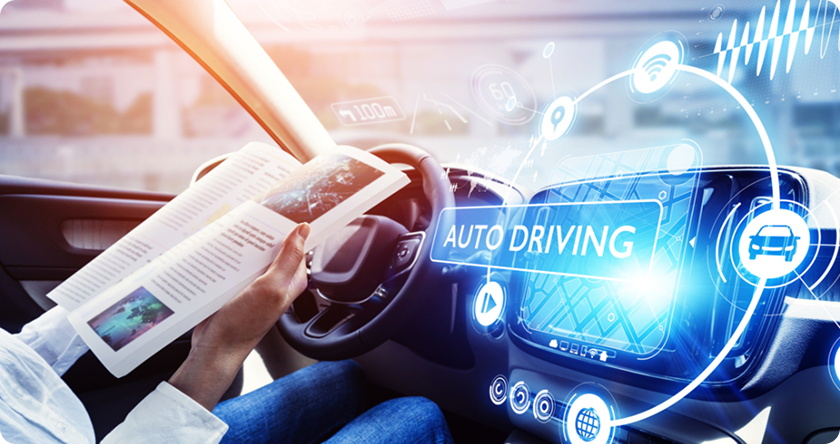

From the invention of the wheel to today’s electric cars, transportation has undergone continual evolution through technological advancements. Now, the world is discussing autonomous vehicles, where cars can navigate and make decisions without human intervention.
The idea began gaining momentum in the 1980s, when German engineer Ernst Dickmanns developed one of the earliest self-driving prototypes using computer vision and sensors. His groundbreaking work laid the foundation for today’s autonomous technologies. But it was the DARPA Grand Challenge in the early 2000s that truly sparked global interest. This U.S. government–backed competition invited engineers to build fully autonomous vehicles—drawing the attention of Silicon Valley, research institutions, and emerging tech giants.
In this blog, we’ll break down how autonomous vehicles work, trace their progress, highlight their benefits, and examine the challenges ahead. Whether you’re a tech enthusiast or just curious, this is your roadmap to the future of transportation.
What Are Autonomous Vehicles?
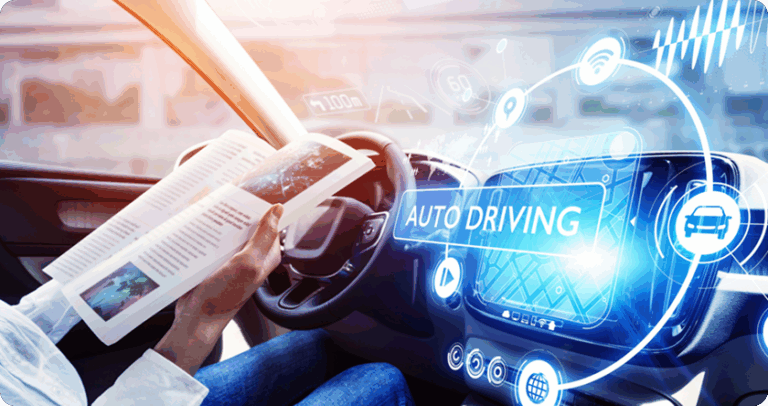
Autonomous vehicles (AVs)—also known as self-driving or driverless cars—are vehicles equipped with technologies that enable them to operate without human intervention. They use a combination of sensors, cameras, radar, LiDAR, and artificial intelligence to perceive their surroundings, make decisions, and safely navigate roads. These vehicles represent a spectrum of automation, ranging from simple driver-assist features to complete independence from human control. This spectrum is defined by the SAE (Society of Automotive Engineers) Levels of Driving Automation, which range from 0 to 5:

As vehicles become increasingly intelligent, the need for human drivers continues to decline, bringing us closer to a fully driverless future. But before we dive deeper, let’s take a moment to understand what autonomous vehicles are and how they’re categorized.
The Technology Behind Autonomous Vehicles
While autonomous vehicles may resemble regular cars on the outside, they rely on a complex combination of hardware and software to mimic—and often surpass—human driving capabilities. At the heart of it all are three key pillars of technology that work together to make autonomy possible:
- Sensors and Perception Systems
- AI, Machine Learning & Decision-Making
- Vehicle-to-Everything (V2X) Communication
Let’s take a closer look at how each of these pillars supports the functioning of autonomous vehicles.
Sensors and Perception Systems
For a car to drive itself, it needs to first see the world around it. This is where the perception system comes in. Autonomous vehicles are equipped with a variety of sensors that continuously collect data from the vehicle’s surroundings:
- LiDAR (Light Detection and Ranging): Utilizes laser beams to create highly accurate 3D maps of the environment.
- Radar: Measures distances and detects objects in poor visibility conditions (e.g., fog or rain).
- Cameras: Help identify road signs, lane markings, pedestrians, and traffic signals.
- Ultrasonic sensors: Typically used for close-range detection, such as during parking.
These sensors feed real-time data to the vehicle’s brain, allowing it to interpret the road environment just like (or better than) a human driver.
AI, Machine Learning & Decision-Making
Once the data is collected, it needs to be understood—and fast. That’s where artificial intelligence and machine learning come into play.
- AI algorithms: To process sensor data to identify objects, predict movement patterns, and make decisions in real-time.
- Machine Learning (ML): It enables the system to learn from previous driving experiences and continually improve its decision-making accuracy.
- Neural networks: They can replicate human thinking, enabling the vehicle to make complex judgments in real-world traffic scenarios.
For example, if a child suddenly runs into the street, the AI must instantly decide whether to brake, swerve, or take another action, just like a human would, but with more speed and precision.
Vehicle-to-Everything (V2X) Communication
The third pillar is about how the vehicle communicates—not just with its surroundings but with the entire ecosystem. V2X (Vehicle-to-Everything) technology enables the vehicle to exchange data with:
- Other vehicles (V2V): Helps avoid collisions and enables coordinated driving (e.g., platooning).
- Infrastructure (V2I): Communicates with traffic lights, road signs, and even construction zones to optimize route planning.
- Pedestrians (V2P): Ensures safer interactions in crowded urban environments.
Combined with 5G connectivity and edge computing, V2X enables split-second coordination between systems, making driving not only smarter but also significantly safer.
These technologies work together to create vehicles that think and act safely. However, beyond the technology, what truly matters is the impact. Let’s look at the key benefits autonomous vehicles offer.
Benefits of Autonomous Vehicles
Autonomous vehicles aren’t just about futuristic features—they promise real-world benefits that can transform how we live, work, and move. From making roads safer to creating a more inclusive transportation system, here’s how AVs are expected to create a lasting impact.
- Safety and Reduced Human Error: Human error accounts for the vast majority of traffic accidents. Autonomous vehicles are designed to consistently follow traffic rules, avoid distractions, and react more quickly to sudden changes. With technologies like predictive braking, lane detection, and 360-degree monitoring, AVs can significantly reduce collisions and save lives.
- Environmental Impact: Self-driving vehicles optimize routes in real time, reducing idle time, unnecessary acceleration, and stop-and-go traffic. When combined with electric drivetrains, they can significantly reduce carbon emissions and fuel consumption, making them a powerful tool in the fight against urban pollution and climate change.
- Enhanced Accessibility: For people who are unable to drive due to age, disability, or health conditions, autonomous vehicles can offer newfound independence. AVs remove the barrier of physical driving and create opportunities for seamless, on-demand transportation that is safer and more reliable.
- Economic and Productivity Gains: Commuters can reclaim hours typically lost to driving, using that time for work, rest, or personal tasks. Businesses benefit from increased delivery efficiency, reduced driver-related costs, and improved fleet management. Over time, AVs could help reshape commuting, logistics, and even urban infrastructure.
While the potential of autonomous vehicles is impressive—from saving lives to reducing emissions—it’s not without its hurdles. To fully realize these benefits, we must first overcome some major challenges that currently hinder widespread adoption.
Challenges Hindering the Mass Adoption of Autonomous Vehicles
While the vision of fully autonomous vehicles holds tremendous promise, the path to large-scale adoption is far from simple. The roadblocks are both technical and infrastructural, as well as legal and deeply human. Let’s explore the key challenges that currently prevent autonomous vehicles from becoming a mainstream reality.
- Technical and Infrastructure Limitations: In unpredictable or poorly marked environments, even the most advanced AVs can struggle. Bad weather, road construction, or unstructured rural areas present major hurdles to safe navigation. Additionally, existing road infrastructure isn’t designed for self-driving systems. The lack of standardized signage, smart traffic signals, or connected highway systems limits the effectiveness and scalability of AVs across cities and regions.
- Regulatory, Legal, and Ethical Hurdles: The legal landscape for AVs is still evolving. Different countries and even states have their frameworks, causing friction in global deployment. Additionally, AVs must be programmed to make ethical decisions, such as how to respond in scenarios where harm is unavoidable. These philosophical dilemmas aren’t just academic—they directly influence software design, liability laws, and consumer acceptance.
- Public Trust and Safety Validation: Many consumers are still uneasy about the idea of riding in a car with no human driver. Every software glitch or publicized incident can set progress back. To build confidence, companies must demonstrate not only technical accuracy but consistency over time. This means extensive testing, transparency in safety data, and proven performance in unpredictable real-world conditions until the general public feels as safe in an autonomous vehicle as they do in a traditional one.
Despite these hurdles, the momentum behind autonomous vehicles continues to grow. As technology matures and trust builds, it’s worth looking ahead at what a world shaped by self-driving cars could look like.
The Future of Transportation with Autonomous Vehicles
By 2035, autonomous driving is expected to generate between $300- $400 billion in annual revenue. But the fundamental transformation lies beyond economic figures.
In dense urban environments, AVs can dramatically reduce the need for personal car ownership. Instead of parking vehicles for most of the day, people will rely on shared, on-demand rides that operate continuously and efficiently. This shift can ease traffic congestion, reduce emissions, and free up large portions of city space currently occupied by parking lots or underused roads. That space can be reimagined for green zones, wider pedestrian pathways, or additional housing, ultimately making cities more livable and sustainable.
As this evolution unfolds, AVs will also become a core part of smart cities—urban systems that use technology and data to function more intelligently. Autonomous vehicles will interact directly with infrastructure, traffic systems, and even energy grids. They’ll contribute to:
- Smarter traffic flow through real-time communication with signals and other vehicles.
- Dynamic route optimization, easing congestion, and improving travel times.
- Continuous road condition monitoring enables cities to respond to hazards more quickly and effectively.
- Greener mobility is achieved by integrating with electric charging networks and renewable energy sources.
- More efficient city planning by reducing the need for massive parking spaces.
In this future, transportation won’t just be about getting from point A to B—it will be a seamlessly connected experience powered by data, designed around people, and deeply integrated into the innovative urban ecosystem.
Conclusion
We’re not here to repeat everything you just read—we’re here to take a step back and reflect. Throughout this blog, we have explored how autonomous vehicles aren’t just about replacing drivers, but about reshaping how we move, build cities, and experience daily life. So now, as we look ahead, it’s worth asking: Are we truly ready for this shift? Not just technically, but culturally, socially, and personally? Because the road ahead isn’t just about technology—it’s about us.
FAQs
What are the different levels of vehicle autonomy defined by SAE, and what do they mean for drivers?
How does Vehicle-to-Everything (V2X) communication improve autonomous vehicle safety and efficiency?
What are the main regulatory challenges slowing down widespread autonomous vehicle adoption?
How do autonomous vehicles contribute to environmental sustainability?
In what ways can autonomous vehicles improve transportation accessibility for people with disabilities or the elderly?