







Consumers have grown numb to generic campaigns that treat everyone the same. That frustration creates a problem for brands: wasted ad spend, falling open rates, and visitors leaving after just one click. Traditional segmentation no longer keeps pace with how quickly expectations shift, and your competitors are already fighting for the same attention.
The agitation only deepens when marketers realize that rules-based targeting feels outdated. Shoppers know when an email is just a template, not tailored to their journey. Audiences now expect experiences that recognize their needs, predict intent, and guide them with precision. Without AI personalization and machine learning marketing, even the most creative campaigns risk being invisible.
Here lies the solution and the opportunity. By leveraging customer experience with AI, businesses can turn overwhelming data into dynamic engagement. From predictive product recommendations to real-time content adjustments, AI-powered personalization allows you to connect on a deeper level, boost conversions, and win lasting loyalty. This is not just a trend but a strategic necessity for any brand looking to thrive in 2025.
Marketers, product managers, and business leaders are all asking: How does AI improve personalization? What are the latest trends in machine learning for engagement? Which AI personalization tools deliver real ROI? The answers are what separate brands that survive from those that dominate.
As we move forward, let’s explore what AI-powered personalization really means, how it works, and why it is reshaping the future of engagement in every industry.
What is AI-Powered Personalization?
Readers often hear the phrase, but rarely grasp its full meaning. AI personalization is not just about showing a customer the product they viewed last week. It is about turning streams of scattered data into experiences that feel almost human. When done right, it delivers relevance at scale, adapting to preferences instantly and building engagement that feels natural rather than forced. Brands that unlock this approach see stronger loyalty, deeper trust, and more conversions.
By the time you finish this section, you will clearly see the difference between traditional personalization and the possibilities unlocked by machine learning marketing, and why this shift matters for every brand focused on customer growth.
AI Personalization Core Concepts Explained Simply
The real power of AI personalization lies in teaching machines to understand patterns we as humans cannot track at speed. Instead of a marketer guessing what might work, algorithms study behavior in real time — what a visitor clicks, how long they stay, which device they use, and even when they are most likely to engage.
That insight is then turned into action. Emails get timed perfectly, product recommendations feel intuitive, and web journeys unfold like they were built for one person alone. The outcome is not just higher click-throughs but a smoother customer experience with AI, where users feel recognized and valued.
The simplicity is this: AI watches, learns, predicts, and personalizes — all without manual intervention. And as you will see, this is where static methods fall short.
Static Personalization vs. Machine Learning Personalization
| Aspect | Static Personalization | Machine Learning Personalization |
| Approach | Rule-based targeting with pre-defined conditions | AI personalization adapts dynamically by learning from every interaction |
| Flexibility | Limited and manual adjustments | Continuous self-optimization powered by machine learning marketing |
| Data Usage | Relies on segmented data sets | Uses massive real-time data streams for predictive insights |
| Customer experiences | Feels repetitive and mechanical | Creates a seamless customer experience with AI that feels natural and tailored |
| Scalability | Struggles as customer base grows | Scales effortlessly, handling millions of users with personalized journeys |
| Outcome | Generic recommendations that may miss intent | Anticipates behavior, boosts engagement, and drives higher conversions |
How Machine Learning Boosts Engagement
When brands fail to connect, it is rarely because they lack creativity. The real problem is relevance. Audiences drown in offers, emails, and ads that all sound the same. That gap between what people want and what they receive creates fatigue, churn, and missed revenue.
This is where machine learning marketing reshapes the game. By reading signals humans overlook, AI moves from reaction to anticipation. It does not just personalize for today; it predicts what will matter tomorrow. That is the difference between campaigns that interrupt and experiences that captivate.
Let us uncover how AI personalization directly drives engagement with predictive recommendations, real-time personalization, and behavioral intelligence.
Predictive recommendations
Shoppers no longer want random suggestions. They want brands to know them, almost as if the experience was built just for them. That is the promise of AI personalization through predictive recommendations.
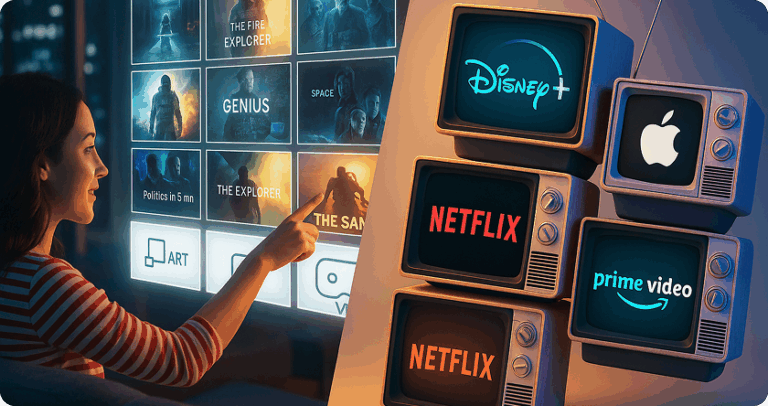
Netflix does not simply show the most popular show; it analyzes your viewing behavior and predicts what you will binge next. Amazon looks beyond your cart to surface items you did not know you needed. Spotify curates playlists that feel handpicked, even though millions receive unique versions at the same time.
These examples prove how customer experience with AI becomes less about algorithms and more about trust. Audiences engage longer, convert faster, and feel valued when every touchpoint anticipates their intent. And when that happens at scale, loyalty turns into habit.
As powerful as recommendations are, personalization only shines when it adapts in real time.
Dynamic content personalization in real time
Static campaigns feel like billboards. They repeat the same message no matter who is watching. Real engagement happens when content adjusts itself the moment a customer interacts.
Through machine learning marketing, websites, apps, and emails become living systems. The homepage you see at noon may look different than the one you saw yesterday. Emails land not just with your name but with content predicted to resonate with your current needs. Even chatbots deliver responses shaped by your journey, not just scripted logic.
This kind of AI personalization transforms digital channels into conversations rather than broadcasts. It keeps users engaged because nothing feels random or irrelevant. Every interaction signals to the customer that the brand is paying attention, and that kind of attention builds trust.
Still, personalization is not only about giving more — it is about reducing the risk of losing customers too soon.
AI-Driven Behavioral Segmentation and Churn Reduction
Every business faces a silent killer: churn. Customers leave when they feel misunderstood, when offers are irrelevant, or when service feels generic. Traditional segmentation groups people into broad buckets, but it fails to catch subtle signs of dissatisfaction.
Machine learning marketing changes that by spotting patterns that humans cannot. It identifies customers at risk of leaving and triggers proactive engagement — a tailored discount, a loyalty perk, or a reminder of value they might have overlooked.
The result is more than retention. It is a customer experience with AI that feels protective, almost as if the brand is one step ahead of your frustration. When companies reduce churn, they do not just save revenue; they extend lifetime value and deepen trust.
As we move forward, the question is not whether personalization works, but how to stay ahead of trends that are shaping its future — from hyper-personalization to ethical AI practices.
AI Personalization Trends Shaping Customer Experience in 2025
Customer expectations evolve faster than most brands can keep up. What delighted users last year now feels ordinary. The advantage lies with businesses that leverage AI personalization to not just react but anticipate needs. These are the key shifts shaping the next wave of customer experience with AI.
Hyper-Personalization and Predictive Analytics
Customers no longer settle for broad targeting. They expect brands to act as if they truly know them. Machine learning marketing enables hyper-personalization by analyzing behaviors, context, and intent signals in real time.
- Goes beyond static recommendations to predictive offers
- Anticipates what customers want before they search
- Increases conversions by delivering the right product at the right time
This predictive accuracy makes interactions feel personal rather than programmed. It sets the foundation for deeper trust, but customers also want these interactions to feel like natural conversations.
Conversational AI for Chatbots and Virtual Assistants
Nobody likes robotic responses or scripted FAQs. AI personalization changes this with conversational AI that feels responsive, human-like, and available around the clock.
- Chatbots understand tone and context from previous interactions
- Virtual assistants guide customers through purchases and troubleshooting
- Each interaction feeds back into machine learning marketing models for continuous improvement
The result is less frustration and more loyalty, as customers feel heard and supported instantly. Still, for engagement to truly matter, it must be consistent across every channel.
AI-Driven Cross-Channel Personalization
A fragmented experience frustrates users. Customers expect a connected journey across email, website, apps, and in-app experiences — and AI personalization delivers exactly that.
- Emails align with browsing behavior and purchase history
- Mobile apps adapt content in real time
- In-app recommendations reflect the customer’s stage in the journey
This seamless flow creates a unified customer experience with AI, where every channel feels like part of one ongoing conversation. Yet the more powerful personalization becomes, the more important it is to build it responsibly.
Ethical and Privacy Considerations in AI Personalization
Trust is the foundation of personalization. Push too far, and customers see your brand as intrusive rather than helpful. With regulations like GDPR and CCPA, ethical practices are no longer optional.
- Clear policies on how data is collected and used
- Bias detection in algorithms to ensure fairness
- Transparent communication that builds credibility
Handled carefully, machine learning marketing not only delivers smarter engagement but also strengthens brand reputation. Customers reward businesses that respect their privacy while delivering value — and that combination sets the stage for industries already leading with AI-driven personalization.
Where AI Personalization is Making the Biggest Impact
Not all industries adopt technology at the same pace. Some sectors already lead the charge, proving that AI personalization and machine learning marketing are not just theories but powerful engines for growth. From shopping experiences that feel bespoke to SaaS platforms that anticipate user needs, to highly regulated fields like healthcare and finance where trust is non-negotiable, the results speak volumes.
Let us look at how different industries are putting customer experience with AI into practice — and why these examples matter for any brand aiming to compete in 2025.
AI Personalization in eCommerce and D2C
Shoppers are overwhelmed with options, and that confusion often leads to abandoned carts and lost sales. Generic recommendations only add to the noise. The opportunity lies in delivering relevance so sharp it feels curated for one customer alone.
- AI personalization powers real-time product recommendations based on browsing behavior and past purchases.
- D2C brands use predictive insights to time offers when customers are most likely to buy.
- Personalized email campaigns deliver not just the customer’s name but the exact product that solves their problem.
This is why Amazon, Shopify brands, and D2C disruptors see higher engagement and conversion rates. The lesson is clear: machine learning marketing does not just suggest, it anticipates. And what works in eCommerce is already reshaping how SaaS platforms grow.
Machine Learning Marketing for SaaS Growth
SaaS users churn when products feel overwhelming or irrelevant. Static onboarding flows or generic feature prompts rarely solve the problem. What keeps users engaged is personalization that adapts to their journey.
- Machine learning marketing helps SaaS platforms suggest the right feature at the right time.
- AI-driven onboarding shortens learning curves and reduces friction
- In-app messages, tooltips, and recommendations evolve based on user behavior patterns.
This turns SaaS products into smarter partners rather than static tools. The deeper the personalization, the higher the lifetime value. Yet the real proof of trust-driven personalization shines in industries where accuracy and responsibility are critical.
Customer Experience with AI in Healthcare, Finance, and EdTech
Few sectors face as much pressure to get personalization right. In healthcare, financial services, and education, the stakes are not just engagement but outcomes and trust. Generic messaging in these fields can feel careless or even unsafe.
- AI personalization in healthcare delivers tailored wellness plans, reminders, and treatment suggestions.
- Finance brands apply predictive analytics to detect fraud while offering personalized investment advice.
- EdTech platforms use customer experience with AI to create adaptive learning paths for students of all levels.
Handled with transparency, this level of personalization builds credibility and confidence. Customers feel that their most important needs are being met with precision. And that trust opens the door to the next stage of transformation — how every brand can start applying these lessons step by step.
Practical Steps to Launch AI Personalization Successfully
Great ideas often fail not because the strategy is weak but because the execution is scattered. Many brands talk about personalization yet struggle to connect the dots between data, tools, and outcomes. The good news is that launching AI personalization does not have to be overwhelming. By focusing on strong data foundations, the right platform, and clear measurement, any business can move from theory to results.
Let’s break it into simple but powerful steps that ensure your machine learning marketing strategy delivers measurable impact.
Building Strong Data Pipelines with CRM, GA4, and Automation
Without clean and connected data, personalization collapses. Disconnected tools create blind spots that frustrate both marketers and customers. To unlock customer experience with AI, you need a pipeline that captures, unifies, and activates insights in real time.
- Integrate your CRM with touchpoints across web, mobile, and email
- Connect behavioral data into GA4 for tracking engagement and attribution
- Use automation tools to sync events instantly instead of relying on manual uploads
A strong pipeline ensures that your personalization engine has the right fuel: reliable, actionable data. Once this foundation is in place, the next step is choosing the right platform to make personalization truly intelligent.
How to Choose the Right AI Personalization Platform
The problem most teams face is tool overload. There are dozens of platforms, each promising smarter targeting and higher conversions. Picking the wrong one wastes budget and slows momentum. The answer lies in aligning platform features with your business goals.
- Look for platforms that combine AI personalization with predictive recommendations.
- Ensure seamless integration with your CRM, analytics, and automation stack.
- Prioritize scalability so your personalization grows as your audience expands.
- Evaluate vendor transparency on privacy and data handling to protect trust.
The right platform does not just personalize campaigns. It evolves with your business and strengthens your machine learning marketing strategy over time. But personalization is only powerful when it can be measured.
Measuring Success with CTR, Conversions, and Retention
Too often, personalization efforts fail because results are vague. Marketers need more than vanity metrics; they need proof that AI is driving growth. The solution is tracking engagement across the funnel.
- Monitor CTR to see if personalized content captures initial interest.
- Track conversion rates to measure how recommendations influence sales.
- Measure retention and churn reduction to prove long-term impact.
When personalization improves all three, it signals that your customer experience with AI is not just working — it is creating lasting value. Clear measurement transforms AI from a buzzword into a business driver. And once these steps are mastered, the next frontier is not only scaling personalization but also preparing for the future of AI-driven engagement.
Future Outlook: The Next Wave of AI Personalization
The race for relevance is far from over. As customers grow accustomed to tailored experiences, the challenge is no longer just personalization but prediction. The next wave of AI personalization will not only respond to customer behavior but also anticipate it, making interactions feel effortless. Businesses that combine intelligent automation with the right human touch will be the ones that win both trust and loyalty.
From Personalization to Anticipation
The frustration with many personalization efforts is that they still feel reactive. Customers want brands to meet them before they even ask. That is where machine learning marketing moves from personalization to anticipation.
- Predictive models will forecast what customers need before they take action
- Shopping journeys will be shaped by proactive recommendations rather than static offers
- Businesses will design experiences that adapt in real time based on intent signals
The result is an elevated customer experience with AI — one that makes the customer feel understood without effort. But as algorithms grow smarter, people still want to know there is a human behind the technology.
Balancing Human Touch with AI-Driven Automation
Automation can amaze, but it can also alienate if it feels cold. Customers may appreciate precision, but they value empathy just as much. Striking the balance between AI personalization and authentic human connection is what will separate sustainable strategies from short-lived wins.
- Use automation to handle repetitive tasks, but let humans step in for empathy-driven moments
- Blend machine learning marketing with brand storytelling to keep engagement humanized
- Make transparency part of the journey so customers know how their data is being used
This balance ensures that technology does not replace relationships but strengthens them. When people feel both understood and respected, they stay loyal. And as we bring this future into focus, the final step is to draw out the key takeaways — the lessons every business leader, marketer, and product owner must remember when embracing the future of AI-powered personalization.
Final Thoughts
The shift from generic campaigns to AI personalization is no longer optional; it is the dividing line between brands that merely survive and those that thrive. By applying machine learning marketing to anticipate needs, deliver real-time relevance, and reduce churn, businesses create a customer experience with AI that feels natural, trustworthy, and indispensable. The future belongs to brands that blend data-driven precision with human empathy, proving that the real power of personalization is not just engagement — it is loyalty that lasts.
FAQs
How does AI improve personalization?
What are the best AI personalization tools?
Is AI personalization suitable for small businesses?
What’s the ROI of AI-powered personalization?