













The business landscape is changing at an unprecedented pace, and Augmented Reality (AR) and Virtual Reality (VR) are driving much of this transformation. These cutting-edge technologies are no longer confined to sci-fi movies or gaming; they are reshaping how companies operate, interact with customers, and drive innovation.
From virtual reality for employee training to augmented reality for immersive customer engagement, businesses across industries are adopting AR and VR solutions to create more meaningful experiences. Whether it’s allowing customers to try on products virtually or giving employees hands-on training in a controlled, simulated environment, AR and VR business applications are enabling businesses to push boundaries like never before.
How AR and VR are changing business goes beyond just improving user experiences. These technologies are streamlining operations, enhancing productivity, and providing innovative ways to market products and services. Companies can now create immersive experiences that leave lasting impressions on their customers, improving brand recall and driving loyalty.
The future of AR and VR in business is bright. As these technologies continue to evolve, their potential to revolutionize business processes is limitless. From VR in business operations to AR for customer engagement, businesses that embrace AR and VR now will find themselves at the forefront of innovation, giving them a competitive edge in the marketplace.
Understanding the Difference Between AR and VR
| Aspect | Augmented Reality | Virtual Reality | Business Application | Real-world Use Case |
| Definition | Enhances the real world with digital content (smartphones, AR glasses). | Completely immerses users in a virtual environment (VR headset). | AR VR business applications: Retail, healthcare, training. | THE IKEA AR App allows users to visualize furniture in their homes. IKEA AR App. |
| Primary Use | Adds virtual layers to the real world (e.g., navigation, virtual try-ons). | Creates a fully immersive virtual environment. | AR in business: Virtual try-ons, navigation, interactive experiences. | Snapchat AR Filters for beauty brands to try on virtual makeup. Snapchat AR. |
| Immersion Level | Partial immersion: Real and digital worlds coexist. | Full immersion: Users are isolated from the real world. | Benefits of augmented reality for businesses: Engaging customer experiences. | Pokémon Go Overlays digital creatures into real-world environments. Pokémon Go AR |
| Technology Requirements | Mobile devices, AR glasses, smart devices. | VR headsets and motion sensors. | VR in business operations: Training, simulations, virtual environments. | Microsoft HoloLens for real-time remote assistance and design. Microsoft HoloLens |
| Key Benefit | How AR and VR are changing business: Enhances real-time customer experiences. | How virtual reality is transforming industries: Offers realistic, risk-free training. | Business transformation with AR/VR: Innovative customer experiences and operational efficiency. | L’Oreal Makeup Genius: Try makeup virtually using AR. L’Oreal AR Makeup |
How AR and VR Are Transforming Key Industries
The advent of Augmented Reality (AR) and Virtual Reality (VR) has created a wave of innovation across various sectors, driving business transformation with AR/VR. These technologies are redefining how businesses operate, interact with customers, and engage employees. From retail to healthcare, AR and VR are providing impactful, immersive experiences that drive efficiency and growth.
E-Commerce: Virtual Try-Ons and Immersive Shopping
- AR VR e-commerce trends are redefining how consumers shop online. With virtual try-ons, customers can see how clothing, accessories, or makeup will look before they buy, improving customer satisfaction and reducing returns.
- 360-degree product views and immersive shopping experiences allow customers to engage with products as if they were in a physical store.
Training & Simulation: VR for Learning, AR for Support
- VR in business has revolutionized training across industries. VR training offers immersive simulations for high-risk scenarios, from medical procedures to machinery operations.
- AR in business supports on-the-job assistance by delivering real-time data and guidance, thereby reducing errors and improving employee productivity.
Healthcare: VR for Simulations, AR for Surgery
- AR applications in healthcare are enhancing surgeries by providing real-time data overlays during procedures, improving precision.
- VR for healthcare enables medical simulation, allowing doctors and students to practice surgeries or diagnose conditions in a risk-free environment.
- Telemedicine has become more accessible with AR and VR, enabling virtual consultations and improving patient care remotely.
Real Estate: Virtual Tours and AR Design
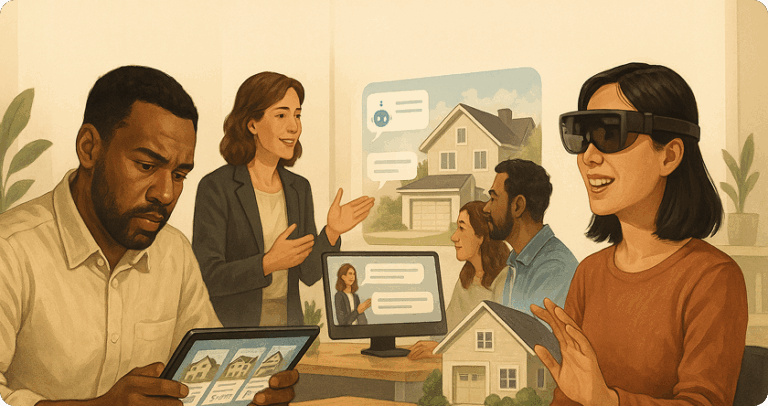
- Real estate virtual tours and AR/VR have transformed property shopping. Buyers can now explore homes virtually before making decisions, saving time and effort.
- AR in retail allows users to visualize how furniture and decor will look in their homes, improving decision-making in interior design.
Manufacturing: Smart Manufacturing with AR, VR Training
- Smart manufacturing with AR VR is streamlining factory operations with real-time monitoring and predictive maintenance, reducing downtime and improving productivity.
- VR training for workers ensures safety by allowing employees to practice using complex machinery in a controlled, immersive environment.
Marketing: Interactive AR Campaigns, VR Experiences
- AR in advertising campaigns is engaging consumers through interactive ads, such as virtual product trials and gamified experiences.
- Immersive marketing with AR and VR enhances brand storytelling by offering customers virtual, engaging experiences that deepen emotional connections with the brand.
Remote Collaboration: Virtual Workspaces and AR Assistance
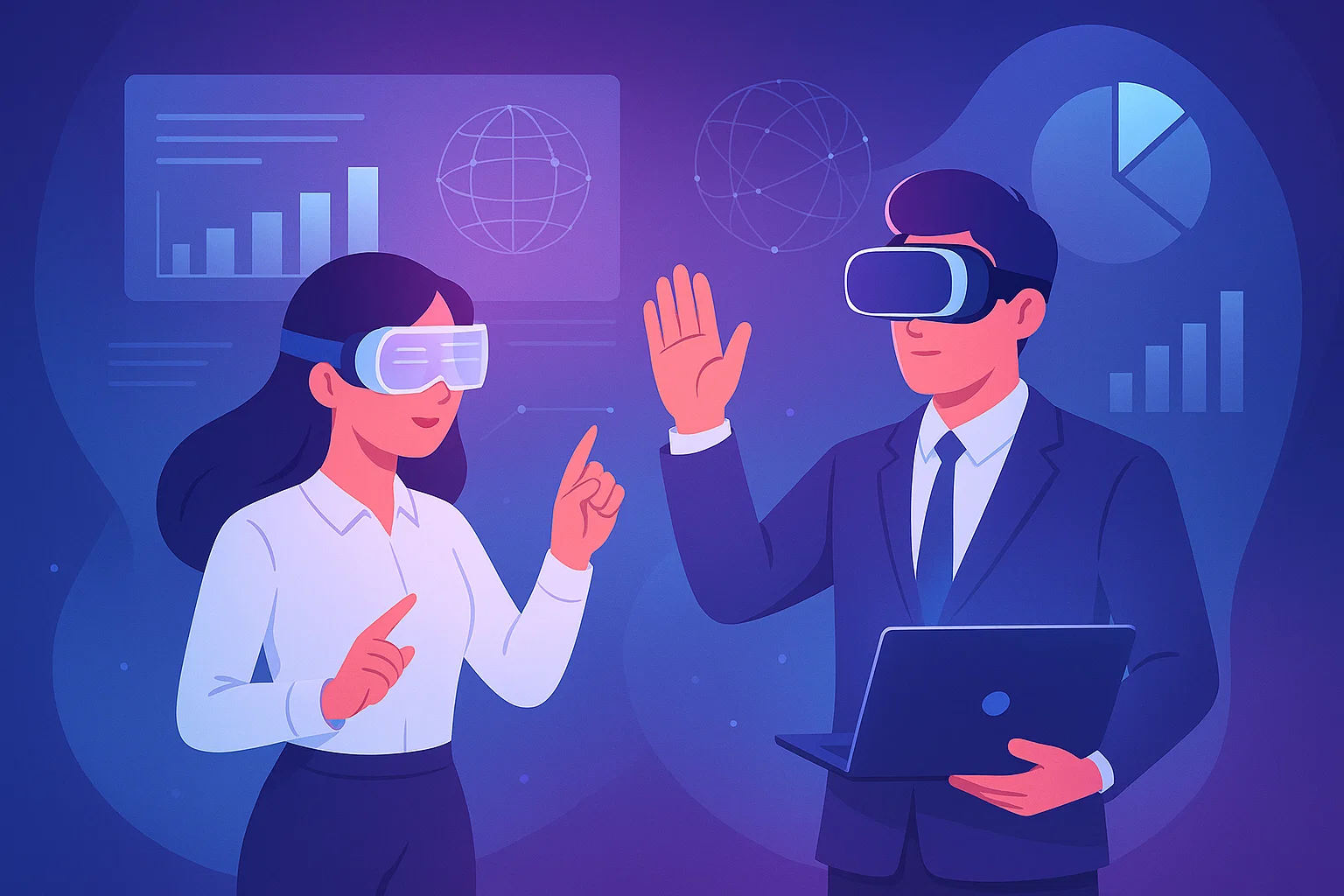
- VR for remote collaboration creates virtual meeting spaces that allow teams to collaborate as if they were physically together, enhancing communication and team cohesion.
- AR for real-time assistance empowers field workers by overlaying visual instructions, allowing remote experts to guide them through tasks efficiently.
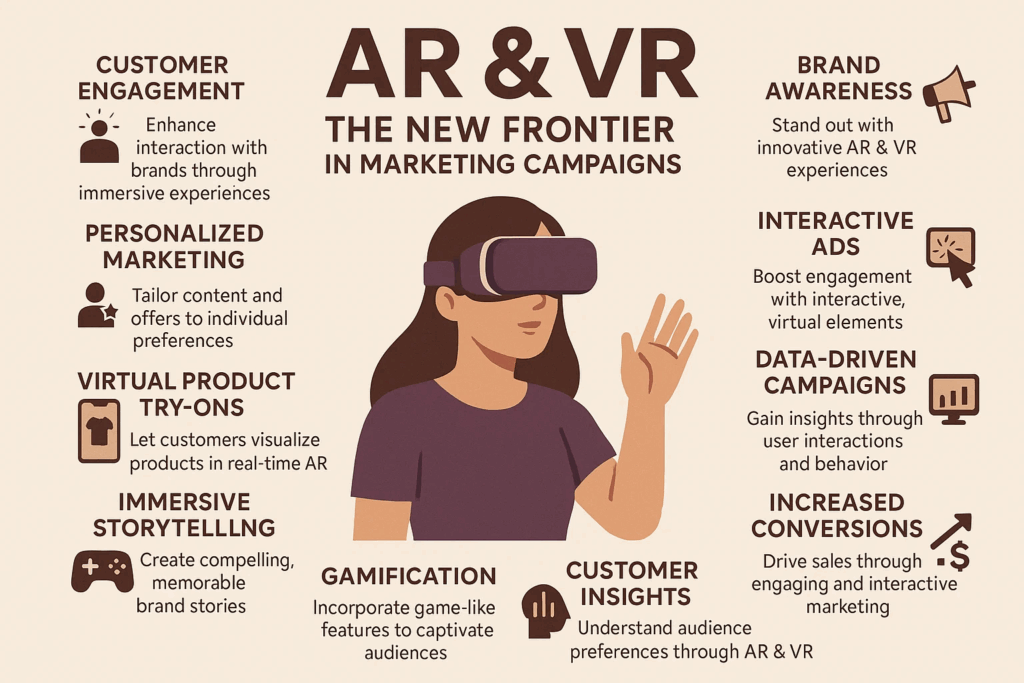
Business Results from Adopting AR and VR Technologies
The adoption of Augmented Reality (AR) and Virtual Reality (VR) is transforming industries by enhancing customer experiences, improving operational efficiency, and driving revenue growth. These technologies are not just innovations; they are essential tools that businesses can leverage to stay competitive, optimize processes, and deliver better products and services. Below are the key business results organizations are experiencing as they integrate AR and VR technologies into their operations.
Enhanced Customer Engagement
By incorporating AR in business, brands are creating interactive experiences that engage customers in real-time. For example, AR VR business applications in retail enable customers to virtually try on clothes, makeup, or visualize furniture in their homes, which leads to higher engagement, customer satisfaction, and ultimately, increased conversion rates. Immersive shopping experiences are driving customers to spend more time on platforms, enhancing loyalty and repeat purchases.
Improved Training and Development
One of the most impactful uses of virtual reality for employee training is in industries that require specialized skills or work in hazardous environments. VR in business operations enables companies to provide immersive training programs, reducing the need for costly, real-world training scenarios. Employees can practice in realistic, yet risk-free virtual environments, boosting their confidence and preparedness for real-world challenges. AR for real-time assistance also supports employees in the field by providing hands-free guidance and instructions, reducing errors, and improving efficiency.
Increased Sales and Conversion Rates
AR VR e-commerce trends have proven that consumers are more likely to purchase products after interacting with them in an augmented reality environment. From virtual try-ons to 360-degree product views, AR and VR are creating opportunities for businesses to showcase their products in innovative ways. This not only increases customer satisfaction but also enhances brand recall and results in higher sales conversion rates.
Cost Savings and Operational Efficiency
Integrating AR applications in manufacturing has allowed companies to streamline operations and cut costs. Real-time data tracking, predictive maintenance, and the ability to troubleshoot with AR devices on-site have improved operational efficiency. Additionally, VR simulation for business operations allows for risk-free testing, preventing costly mistakes and delays. Smart manufacturing with AR VR ensures higher productivity, faster problem resolution, and lower downtime.
Stronger Brand Presence and Marketing Impact
The immersive marketing with AR and VR enables companies to create campaigns that go beyond traditional ads. AR in advertising campaigns is transforming how brands interact with their audiences by offering interactive, personalized experiences that resonate with consumers. As a result, businesses can achieve higher engagement rates, build stronger emotional connections, and stand out in crowded markets.
Streamlined Remote Collaboration
VR for remote collaboration has allowed businesses to overcome geographical barriers. Virtual workspaces provide teams with the ability to interact in a shared digital environment, fostering collaboration, innovation, and faster decision-making. With AR for real-time assistance, remote experts can provide guidance and support to on-site workers, ensuring tasks are completed efficiently without the need for travel.
Competitive Advantage
The future of AR and VR in business is poised to shape the next phase of digital transformation. Early adopters who integrate AR and VR now are gaining a competitive edge by offering innovative customer experiences, improving internal operations, and staying ahead of the curve. From VR in healthcare applications to AR technology in logistics, these industries are evolving rapidly with the support of AR and VR technologies, and businesses that invest in them today will have a strong position in the market tomorrow.
The business results from adopting AR and VR technologies show that these innovations are not just improving experiences but also driving tangible business outcomes. Whether it’s through enhanced customer engagement, cost savings, or more effective training, AR and VR are proving to be essential in today’s competitive business environment. As these technologies continue to evolve, the future of AR and VR in business looks promising, with endless possibilities to create better experiences and optimize business operations.
The Future of AR and VR in Business
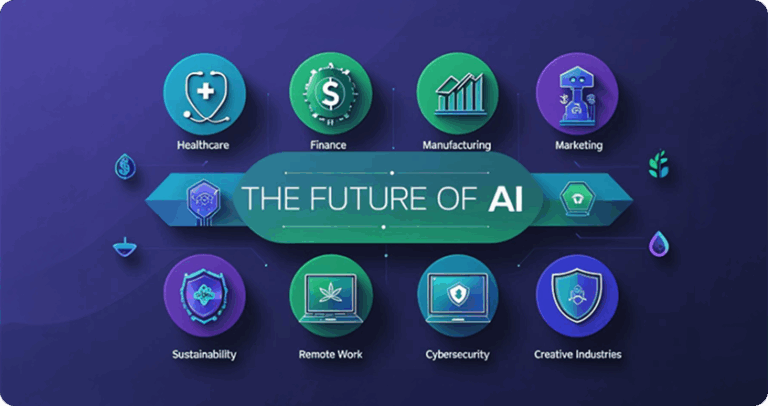
The future of AR and VR in business is set to redefine how companies operate, engage with customers, and improve efficiency. Virtual and augmented reality technologies are not just futuristic concepts; they are transforming industries today.
AR in business is already enhancing customer engagement through virtual try-ons and product visualizations. In the future, it will expand to offer real-time guidance for workers, such as in warehouses or during surgeries, improving precision and operational efficiency.
VR in business is revolutionizing employee training, allowing workers to practice complex tasks in a risk-free environment. As the technology advances, VR for business operations will become even more realistic, reducing training costs and enhancing skills development.
Immersive marketing and remote collaboration will also play a key role in the future. VR for remote collaboration will enable teams to interact in virtual workspaces, while AR in advertising campaigns will create personalized and engaging experiences that build brand loyalty.
By embracing AR and VR technologies, businesses can gain a competitive edge, improve productivity, and offer unique customer experiences. The future of AR and VR in business promises continued innovation and growth for companies that adopt these technologies early.
Final Thoughts
Augmented Reality (AR) and Virtual Reality (VR) are reshaping the future of business across industries. From enhancing customer engagement through virtual try-ons and immersive experiences to transforming employee training and operational efficiency, AR and VR are proving to be crucial tools for business transformation. As VR in business continues to revolutionize employee training and AR in business enhances customer interaction, companies that embrace these technologies will gain a competitive advantage. The potential for AR/VR business applications to streamline operations, boost sales, and create personalized marketing campaigns is vast, making it clear that the future of AR and VR in business is bright, innovative, and essential for growth.
FAQs
How can small businesses leverage AR and VR without high upfront costs?
Can AR and VR help with sustainability in business operations?
How will AR and VR influence the future of remote work?
How can AR and VR help businesses with data visualization?
What impact will 5G have on the adoption of AR and VR in business?