














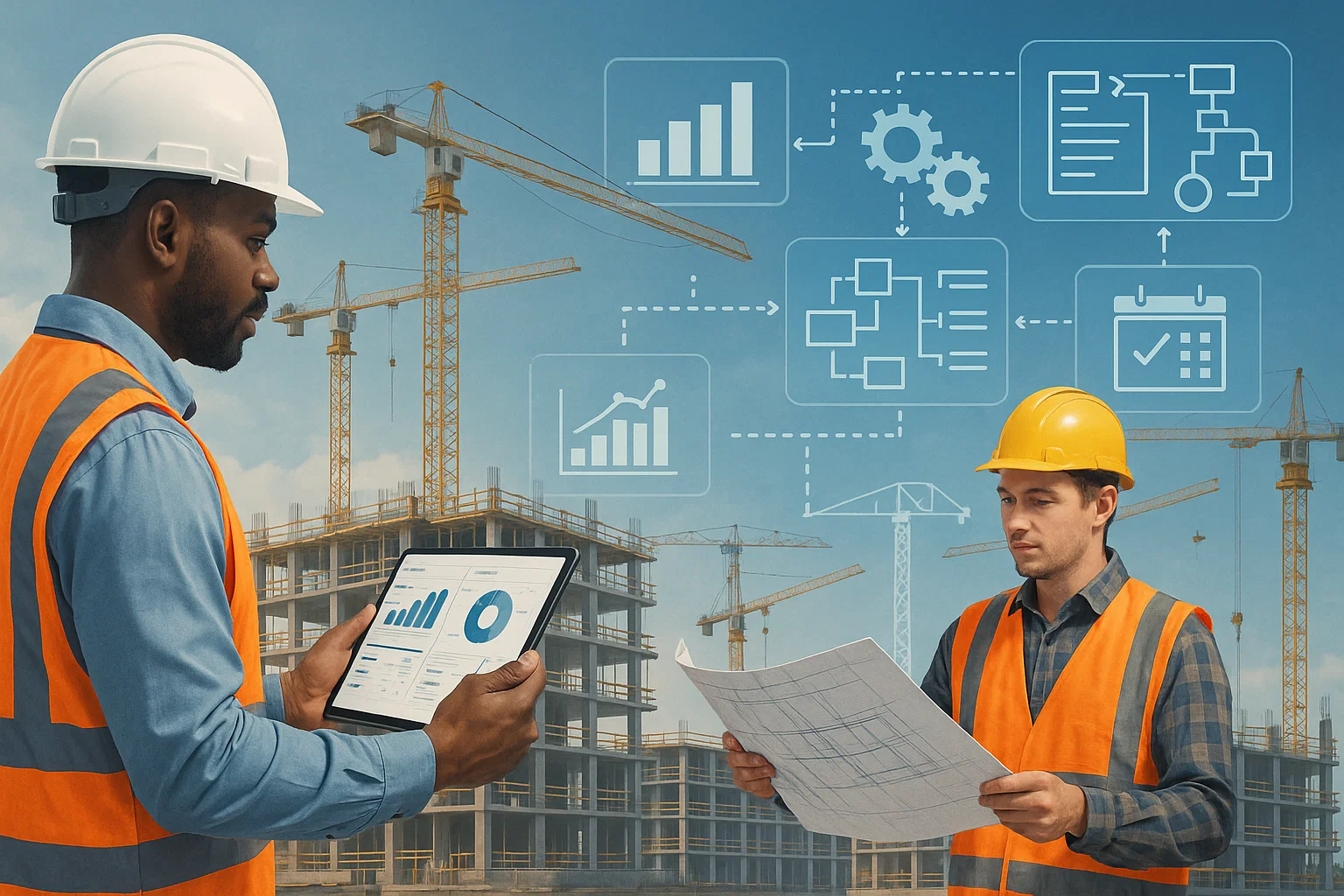

The way we manage construction projects is evolving, and digital construction management is leading the charge. Construction project management has traditionally been filled with challenges—timelines to meet, budgets to manage, and teams to coordinate. However, in an era of rapid technological advancement, those old methods are no longer sufficient. Digital tools are now transforming how we plan, execute, and track construction projects, making processes smoother, more efficient, and ultimately, more successful.
However, here’s the kicker: many construction firms are still stuck in the past, relying on outdated systems and manual processes that hinder them from reaching their full potential. Imagine, for a moment, a project that runs seamlessly—where every task is tracked, every team member is aligned, and every decision is backed by real-time data. That’s the power of digital construction.
The truth is, digital construction management isn’t just a buzzword—it’s a critical step forward. It’s not just about efficiency; it’s about improving quality, minimizing risks, and delivering projects faster and more cost-effectively. The tools available today are designed to simplify your workflows, facilitate collaboration, and provide the insights you need to manage your projects with precision and efficiency.
The future of construction project management is digital, and companies that embrace it will be the ones to lead the industry. But the question remains—are you ready to make the leap and unlock the full potential of digital tools?
Why Digital Construction is a Game Changer for Project Managers
Construction project management isn’t just about overseeing timelines and budgets; it’s about ensuring that every detail of the project runs smoothly, efficiently, and without hiccups. However, traditional methods often fall short, leading to missed deadlines, costly mistakes, and communication breakdowns. The truth is, digital construction management is not just a trend—it’s a total game changer for project managers who want to stay ahead of the curve.
When you shift from manual, outdated systems to digital construction management, you’re not just upgrading your tools—you’re transforming the entire way your projects operate.
The benefits are clear: faster decision-making, improved collaboration, and a much higher chance of success. But it doesn’t stop there. By embracing the digital shift, you unlock a whole new world of opportunities for your team and projects.
Here’s how digital construction management truly changes the game:
- Real-Time Data & Instant Access: No more waiting for updates or hunting down information. With digital construction tools, every team member has access to real-time data, ensuring you’re always on top of progress and potential issues before they escalate.
- Enhanced Collaboration Across Teams: Digital construction management tools eliminate the silos between different departments. Whether it’s architects, contractors, or suppliers, everyone is on the same page, making collaboration seamless and communication more transparent.
- Increased Efficiency & Reduced Risk: Automating tasks and tracking progress digitally reduces human error, enabling your team to work faster and smarter. You’ll also minimize risks by identifying potential problems before they occur, preventing costly delays and budget overruns.
- Improved Budgeting & Cost Control: With digital construction management, tracking expenses is far easier and more accurate. You’ll have the power to forecast costs, track spending in real time, and avoid budget overruns.
- Better Resource Allocation: No more guessing about resource needs. Digital tools help project managers track material usage and worker allocation, ensuring the right resources are in the right place at the right time.
- Faster Project Delivery: Digital construction solutions streamline the entire workflow, leading to projects that are completed on time, within budget, and with fewer obstacles. Faster execution enables you to take on more projects and enhance profitability.
- Transparency & Accountability: With digital construction management platforms, everyone is aware of their responsibilities and can track progress. This transparency fosters accountability and ensures no task is left behind or forgotten.
Embracing digital construction management isn’t just about upgrading your tools—it’s about fundamentally changing the way your team works.
Top Digital Tools for Effective Construction Project Management
When it comes to managing a construction project, the right digital tools can make all the difference. Gone are the days of manually tracking timelines, budgets, and project statuses. Today, there are robust construction management software solutions that streamline workflows, enhance collaboration, and keep projects on track. From planning to execution, these tools ensure you’re always a step ahead. Here’s a look at some of the best software and technologies making an impact in construction project management:
- Procore: A comprehensive construction project management platform that covers everything from budgeting to scheduling. Procore integrates with other tools, providing real-time access to project data and making it an ideal solution for managing large and complex projects.
- BuilderTrend is a cloud-based construction management platform that offers project scheduling, financial management, and document sharing features. It’s designed to help contractors, subs, and owners collaborate efficiently across the entire project lifecycle.
- CoConstruct: An excellent choice for custom builders, CoConstruct is designed to streamline project management, client communication, and budgeting. It’s an all-in-one solution that allows for easy project tracking, resource management, and client updates.
- BIM 360: It connects teams and data in a single platform, leveraging Building Information Modeling (BIM) to improve construction project outcomes. It enhances design, collaboration, and project delivery with features like real-time data sharing and issue tracking.
- Smartsheet: A flexible construction project management tool that combines digital construction management with traditional project management features. Smartsheet’s easy-to-use interface helps manage schedules, resources, and budgets with customizable templates.
- Fieldwire: This construction management software focuses on task management and team collaboration. It allows on-site teams to access blueprints, track progress, and manage tasks directly from their mobile devices, keeping everything aligned in real-time.
- PlanGrid: It is an intuitive tool for managing construction plans and documents. It enables teams to mark up blueprints, track project changes, and instantly share updates, ensuring that everyone works from the same set of data.
- Aconex: For large-scale projects, Aconex offers cloud-based solutions for project control and document management. It’s known for improving construction project workflows with features that streamline collaboration and communication across teams.
Each of these tools plays a critical role in making construction project management more efficient and effective. Digital construction technology is transforming the way projects are planned, executed, and completed, ultimately ensuring better outcomes for all parties involved. The integration of construction management software into your workflow can significantly reduce errors, boost efficiency, and increase profitability.
How Digital Construction Management Enhances Efficiency and Accuracy
Managing construction projects is a complex task. Project managers juggle budgets, schedules, subcontractors, and materials, where even small mistakes can lead to costly delays. This is where digital construction management steps in, providing an innovative solution to minimize errors, reduce inefficiencies, and ensure project success.
With digital construction tools, project managers can access real-time data, make informed decisions, and minimize human error. From digital blueprints to progress tracking and predictive analytics, construction project management becomes streamlined, ensuring tasks are completed right the first time.
Adopting digital solutions transforms project management. Whether handling large-scale builds or more minor renovations, construction management software helps track every detail, monitor performance, and address issues before they escalate—working smarter, not harder.
Here’s how digital construction management enhances efficiency and accuracy:
- Instant Access to Information: With digital construction management, all your data is centralized and easily accessible, enabling you to make faster and more accurate decisions.
- Real-Time Tracking: Digital tools let you track project progress in real-time. From material deliveries to task completions, you can stay on top of every aspect of your project, ensuring everything is on track and reducing the risk of delays.
- Predictive Analytics: By analyzing historical data, digital platforms can help predict potential issues, from budget overruns to scheduling conflicts. This means fewer surprises and a more proactive approach to problem-solving.
- Collaboration Made Easy: Digital tools streamline communication between teams, contractors, and stakeholders. Everyone stays informed, ensuring that no one is left out of the decision-making process, which leads to smoother project execution and fewer misunderstandings.
- Automated Workflow: Digital solutions automate routine tasks, such as scheduling, tracking, and document management. This reduces the chance for errors, speeds up tasks, and ensures that critical deadlines aren’t missed.
- Improved Accountability: With construction management software, everyone’s responsibilities are clearly outlined, and progress can be tracked in real time. This leads to better accountability, ensuring that tasks are completed according to the agreed-upon schedule and quality standards.
Adopting digital construction management is no longer optional—it’s essential. The tools available today can significantly enhance the accuracy of your project execution, minimize costly mistakes, and boost overall efficiency.
Challenges in Implementing Digital Construction Solutions
Implementing digital construction solutions presents a range of challenges, but overcoming these hurdles is crucial for unlocking greater efficiency and success in construction project management. Here are the key obstacles teams face during the transition:
- Resistance to Change: Many team members may be hesitant to switch from traditional methods to digital tools, fearing disruption to established workflows or unfamiliarity with the new technology.
- Integration Issues: New digital tools may not always integrate seamlessly with existing systems, causing technical difficulties, inefficiencies, or data silos that hinder overall project progress.
- Data Security Concerns: Storing sensitive project information digitally brings risks of cyber-attacks, unauthorized access, or data breaches, which must be addressed through robust security measures.
- Lack of Training: Without proper training, teams may struggle to use digital tools effectively, slowing down the adoption process and leading to errors or missed opportunities.
- High Initial Costs: The upfront cost of digital tools, training, and necessary infrastructure can be a barrier for many companies, making it crucial to evaluate the return on investment and long-term savings.
Understanding these challenges and knowing how to address them will help construction teams make a successful transition to digital construction management.
How to Choose the Right Digital Tools for Your Construction Projects
Choosing the right digital construction tools is essential for streamlining your workflow and ensuring project success. With numerous options available, selecting the most suitable tools for your specific needs can be a daunting task. Here’s a practical guide to help you make the right choice:
- Assess Your Needs: Start by evaluating the specific requirements of your projects. Are you focusing on scheduling, budgeting, communication, or document management? Understand what your team needs most, whether it’s real-time collaboration, project tracking, or resource management.
- Scalability and Flexibility: Choose tools that can grow with your projects. Consider whether the software is adaptable to different project sizes and types, and if it can be customized to fit your workflow as your team evolves.
- User-Friendliness: The best construction project management tools are intuitive and easy to navigate. A tool that’s difficult to use will slow down adoption and lead to frustration. Opt for platforms with a simple interface and strong customer support.
- Integration Capabilities: Ensure that the digital tools you choose can integrate with your existing systems. Whether it’s accounting software, scheduling tools, or communication platforms, seamless integration will minimize disruptions and improve efficiency.
- Security Features: Protect your project data by selecting software with robust data security features, including encrypted communication, two-factor authentication, and secure cloud storage.
- Cost vs. ROI: While upfront costs are substantial, focus on the long-term value. A tool that saves time, reduces errors, and improves efficiency will deliver a high return on investment. Compare pricing plans and look for tools that fit within your budget while providing the necessary features.
- Customer Support and Training: Opt for tools that offer strong customer support and resources to help your team get up to speed quickly. The availability of training and a responsive support team can significantly reduce the learning curve.
Choosing the right digital construction management tools involves striking a balance between your project’s needs, budget, and long-term goals. By evaluating these factors, you can select a platform that enhances efficiency, reduces risks, and ensures smoother project execution.
Digital Construction Management: Proven Success Stories Driving Project Efficiency
The shift to digital construction management has revolutionized how leading construction companies manage their projects. From streamlining workflows to improving collaboration and accuracy, digital tools have played a pivotal role in transforming project management. Here are some standout examples where digital construction solutions have delivered remarkable results:
BAM Construct UK
Challenge: Inefficiencies in project timelines and cost management.
Solution: Building Information Modeling (BIM) and real-time data tracking.
Impact:
- Reduced project delivery times by enhancing collaboration and communication.
- Minimized cost overruns through better data analysis and real-time tracking.
- Improved decision-making, ensuring smoother project execution.
See more about BAM’s transformation
Lendlease
Challenge: Managing complex, large-scale projects with multiple stakeholders.
Solution: BIM and cloud-based project management software.
Impact:
- Streamlined resource management, reducing operational inefficiencies.
- Improved team collaboration and coordination through integrated digital tools.
- Reduced project completion times and better alignment with client expectations.
Learn more about Lendlease’s success
Skanska
Challenge: Complex project workflows and communication barriers.
Solution: Cloud-based platforms and digital project management tools.
Impact:
- Reduced manual tasks and improved task delegation.
- Enhanced communication across teams for faster decision-making.
- Boosted overall project execution with faster turnaround times and better accuracy.
Read Skanska’s case study here
Swinerton Builders
Challenge: Optimizing project workflows and communication in a large team environment.
Solution: Cloud-based digital construction management tools.
Impact:
- Increased efficiency and reduced errors with automated workflows.
- Improved resource allocation and project tracking.
- Successfully reduced project costs while delivering higher-quality results.
Discover Swinerton’s journey
These real-world case studies show how embracing digital construction management tools can propel construction projects to new heights. Whether it’s reducing costs, enhancing collaboration, or speeding up project timelines, these digital solutions are proving that technology is the key to future-proofing construction projects.
The Future of Digital Construction Management: What’s Next?
Digital construction management is revolutionizing the way construction projects are planned, executed, and delivered. As we’ve seen through real-world case studies, embracing digital tools allows companies to streamline workflows, enhance collaboration, reduce costs, and ensure projects are completed on time and within budget. The benefits of digital construction solutions are clear—improved efficiency, better resource management, and more accurate decision-making, all leading to higher-quality outcomes.
However, the shift to digital also presents challenges, including resistance to change, integration issues, and concerns over training and data security. But overcoming these obstacles is key to unlocking the full potential of digital construction. As the industry continues to innovate with technologies such as BIM, predictive analytics, and AI, the future of construction project management appears even more promising. The tools and solutions available today provide a clear roadmap for success—helping you work smarter, not harder, and paving the way for a more efficient, cost-effective, and sustainable future in construction.
FAQs
What industries benefit most from digital construction management?
How does digital construction management impact sustainability?
Is digital construction management suitable for small contractors?
What role does mobile access play in digital construction management?
Can digital construction tools integrate with accounting and ERP systems?