



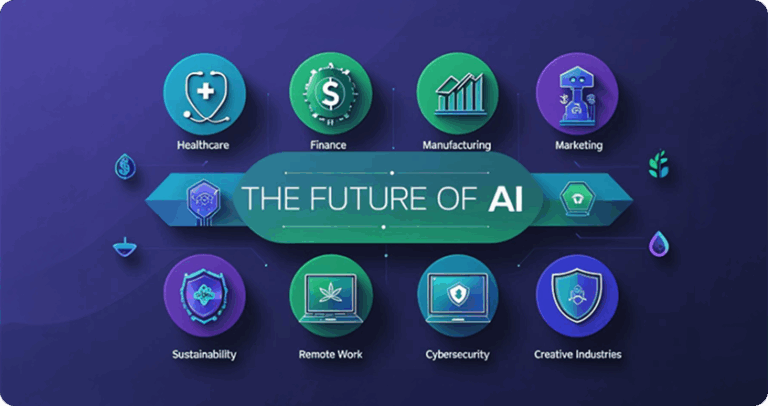











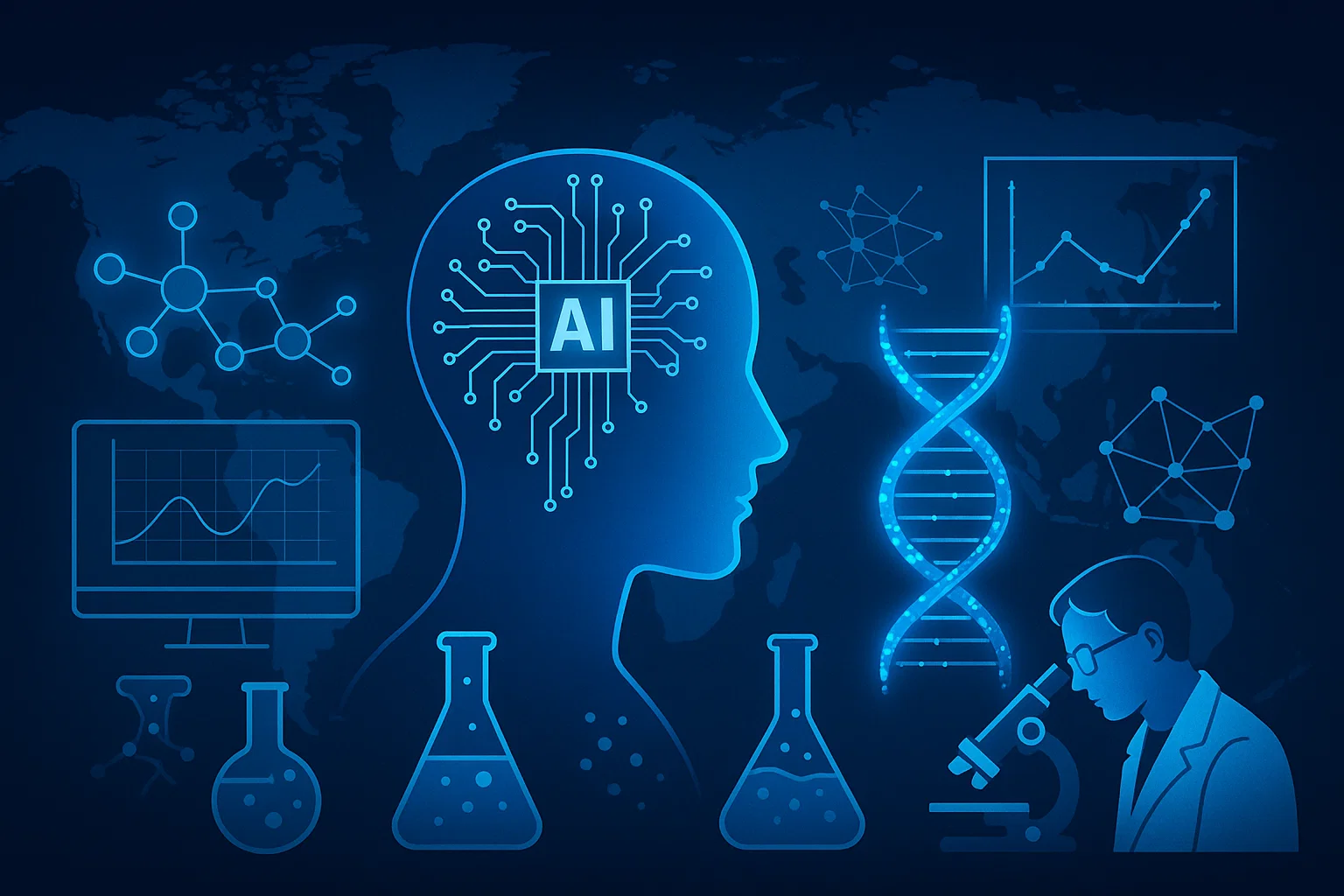

AI is reshaping the future of scientific research, and the shift is happening faster than many realize. For years, researchers have battled through massive data sets, searching for patterns and insights to drive innovation. Machine learning in science is changing that, giving researchers the ability to process and analyze data with remarkable speed and precision.
From AI in drug discovery to biomedical research, AI isn’t just a tool—it’s a game-changer. Imagine a system that accelerates scientific breakthroughs by predicting outcomes, analyzing genetic sequences, and even recommending treatments. AI is empowering researchers to go beyond human limitations, unlocking new possibilities in ways we never thought possible.
As we look to the future, the potential of AI to revolutionize research is only just beginning. It’s not a question of if AI will redefine the way we do science—it’s a question of how quickly it will.
Stay with us to see how this incredible technology is reshaping the landscape of scientific discovery in 2025.
AI in Drug Discovery: Accelerating Medical Breakthroughs
AI is revolutionizing drug development, transforming the way we discover new treatments and speeding up the process dramatically. By analyzing vast datasets with precision, AI-powered tools identify promising drug candidates faster and more accurately than ever before, significantly reducing the time and cost involved in bringing life-saving medications to market.
From AI in cancer treatment to breakthroughs in neurological diseases, these innovations are not just advancing drug discovery—they’re shaping the future of medicine. This transformative technology is enabling personalized treatments that cater to individual genetic profiles, making medicine more effective and accessible.
As we dive deeper, you’ll discover how AI is accelerating drug development, reducing costs, and revolutionizing the way we approach healthcare. The future of medical breakthroughs is here, and AI is at the core of it all. Keep reading to learn how these advancements are reshaping the pharmaceutical industry.
AI Accelerating the Discovery of New Treatments
Time is everything in drug discovery, especially for critical areas like cancer, rare diseases, and neurological disorders. AI is fast-tracking this process, helping scientists sift through vast datasets and pinpoint potential therapies in record time. Leading pharmaceutical companies are already leveraging AI to develop drugs, and the results are promising.
- AI in Drug Discovery: By analyzing big data and using predictive analytics, AI identifies trends and correlations that were previously overlooked, helping researchers spot new drug targets and biomarkers for breakthrough treatments.
- Personalized Medicine: AI is not only accelerating drug discovery but also enabling personalized treatments tailored to a patient’s genetic makeup, ensuring higher effectiveness and fewer side effects.
- AI-Driven Clinical Trials: Traditional clinical trials are lengthy and costly. With AI, virtual simulations of these trials are speeding up the process and reducing costs, enabling faster market access for critical treatments.
AI’s influence on drug discovery is more than a future trend—it’s reshaping healthcare today. As we move forward, the potential to revolutionize patient care is immense.
The Role of AI in Reducing Development Costs
One of the standout benefits of AI in drug development is its ability to cut costs significantly. Research and development in pharmaceuticals often run into billions, with a massive chunk of that budget spent on traditional clinical trials. AI is changing this landscape.
- Improved Predictive Accuracy: AI tools are helping identify the most promising drug candidates early, reducing the resources spent on compounds that don’t work.
- Automating Data Analysis: AI streamlines the research process by automating data analysis, eliminating repetitive tasks, and speeding up the overall process without compromising on quality.
- Budget Efficiency: AI enables pharmaceutical companies to focus their budgets on high-impact innovations, thereby accelerating drug screening, predicting clinical outcomes, and ultimately making treatments more accessible.
AI is not just about making development cheaper; it’s about making healthcare more efficient and accessible. Stay with us to discover more ways AI is driving medical breakthroughs and transforming the healthcare industry.
AI-Powered Tools for Scientific Discovery: What’s Available?
In the fast-evolving world of scientific discovery, AI is the driving force behind breakthrough innovations in fields like genomics, chemistry, and beyond. AI in Scientific Discovery is more than just a buzzword—it’s reshaping the very process of research, enabling scientists to analyze complex data sets, predict outcomes, and identify new opportunities for discovery at an unprecedented pace.
If you’ve ever felt overwhelmed by the complexity of scientific data or the sheer volume of information you need to analyze, AI-powered tools are here to make it easier. Machine learning in science is providing researchers with the ability to draw insights from data that was previously too vast or complicated to process. Let’s explore the cutting-edge tools that are revolutionizing research and unlocking new possibilities.
AI in Genomics: Unlocking the Blueprint of Life
AI is making significant strides in genomics, where it is transforming how we understand the genetic makeup of living organisms. Through powerful algorithms, AI can rapidly analyze genetic data, identify mutations, and predict how these mutations might impact health or disease.
- AI in DNA Sequencing: Tools powered by AI are accelerating DNA sequencing, allowing scientists to map genomes faster and more accurately, leading to discoveries in genetics and personalized medicine.
- Gene Editing: Machine learning models can predict the outcome of gene edits, making CRISPR technology more precise and opening up new avenues for treating genetic disorders.
AI is not just streamlining research; it’s making it possible to revolutionize treatments for genetic diseases and explore the complexities of human biology. As we dive deeper, you’ll see how AI-powered tools are transforming genomic research and paving the way for a future of personalized healthcare.
AI in Chemistry: Accelerating Drug Discovery
Chemistry is another area where AI is creating seismic shifts. From predicting chemical reactions to designing new molecules, AI-powered tools are speeding up the drug discovery process and opening new doors to pharmaceutical innovations.
- Predicting Chemical Reactions: With the help of AI, scientists can simulate chemical reactions, predict outcomes, and determine the best compounds for further testing without the need for expensive lab trials.
- Molecular Modeling: AI is enabling researchers to create accurate molecular models, leading to better drug candidates and more effective treatments, all while cutting down the time spent on trial-and-error processes.
The ability to quickly identify viable drug candidates and predict chemical behavior is allowing pharmaceutical companies to speed up development, reduce costs, and bring life-saving drugs to market faster than ever before. Keep reading to learn how AI tools are reshaping the landscape of chemical research and drug development.
AI in Predictive Analytics: Revolutionizing Research with Data
One of the most transformative aspects of AI is its ability to analyze vast datasets and uncover patterns that would have been impossible to detect otherwise. Predictive analytics, powered by AI, is helping scientists anticipate outcomes, identify trends, and make data-driven decisions that push the boundaries of scientific discovery.
- Data-Driven Insights: AI can process and analyze complex research data, providing scientists with insights that are both faster and more accurate than traditional methods.
- Modeling Future Scenarios: AI allows researchers to create predictive models that simulate various scenarios, helping them make informed decisions about future experiments or clinical trials.
By harnessing predictive analytics, AI is accelerating the pace of scientific innovation, enabling researchers to answer questions and solve problems more efficiently. As we look ahead, AI is set to play a pivotal role in driving discoveries across a wide range of scientific fields.
AI in Imaging: Enhancing Visual Research
Another area where AI is making a significant impact is in scientific imaging. AI-powered imaging tools are enabling researchers to analyze microscopic images, medical scans, and satellite data with unparalleled precision, unlocking insights that were once out of reach.
- Medical Imaging: In fields like radiology, AI can assist in identifying patterns in X-rays and MRI scans, enabling early diagnosis and more accurate treatment planning.
- Microscopy: AI is being used to automate microscopy analysis, helping scientists examine cells, tissues, and proteins with greater accuracy, which is critical in fields like cancer research.
These innovations are making research not only faster but also more accurate and reliable, enhancing the quality of scientific findings and improving our ability to solve global health challenges.
AI in Automation: Streamlining Scientific Research
Finally, AI is transforming scientific research through automation. By taking over repetitive tasks, AI allows scientists to focus on what they do best—innovating and discovering.
- Automating Data Entry: AI is automating tedious tasks like data entry and sorting, freeing up valuable time for researchers to focus on more critical aspects of their work.
- Real-Time Monitoring: AI tools are also enabling real-time monitoring of experiments and trials, providing immediate feedback and adjustments that can improve the efficiency and success of scientific research.
Automation through AI is making research more efficient, allowing scientists to conduct experiments and analyze results at a faster pace while maintaining high accuracy.
AI-powered tools are reshaping scientific discovery and opening up new possibilities in a wide range of fields. As we continue to explore the potential of AI, it’s clear that the future of research is not just digital—it’s intelligent. Keep reading to see how these tools are helping scientists achieve breakthroughs and tackle some of the world’s most pressing challenges.
AI in Climate Science: Revolutionizing Environmental Research
The battle against climate change is one of the most pressing challenges of our time, and AI in climate science is emerging as a powerful ally in this fight. With climate change accelerating, researchers need to analyze vast amounts of environmental data quickly and accurately to understand trends, predict outcomes, and develop practical solutions. AI in scientific discovery is giving researchers the tools they need to process complex datasets and draw actionable insights in ways that were previously unimaginable.
From monitoring deforestation to predicting extreme weather events, machine learning in science is driving innovation and offering solutions for some of the most challenging problems in environmental research. But how exactly is AI helping scientists understand climate change?
AI’s Power to Analyze Climate Data at Scale
Traditional methods of analyzing climate data have limitations. Collecting data from satellites, weather stations, and environmental sensors produces an overwhelming amount of information, making it nearly impossible for researchers to process manually. This is where AI in climate science steps in.
- Machine learning algorithms can sift through massive datasets, identifying patterns and correlations that would take humans years to uncover. Whether it’s tracking rising global temperatures, identifying pollution hotspots, or mapping ice sheet dynamics, AI tools are accelerating research by making sense of vast amounts of data in real time.
- These tools not only save time but also improve accuracy, ensuring that critical environmental changes are detected early. By analyzing trends and forecasting potential outcomes, AI is enabling researchers to predict climate shifts and assess the effectiveness of mitigation strategies.
The capability of AI to process and analyze environmental data is making climate research faster, more accurate, and ultimately more actionable. AI-powered tools are helping scientists make informed decisions that could slow down the negative impacts of climate change.
Predicting Climate Change: AI as a Decision-Making Tool
One of the most powerful applications of AI in climate science is its ability to predict the future of our planet’s climate. Researchers can now use AI to build predictive models that simulate various climate scenarios, taking into account multiple variables such as CO2 emissions, deforestation, and ocean temperatures.
- AI-driven models can predict the impact of specific actions on the environment, such as the consequences of carbon reduction policies or the restoration of natural ecosystems. By running simulations, scientists can gain valuable insights into the potential outcomes of different strategies, allowing them to make data-backed decisions that could change the trajectory of climate change.
- Furthermore, these models can help policymakers allocate resources more effectively by highlighting the most urgent areas that need attention.
AI is empowering climate scientists to make better, faster decisions based on solid data, improving the overall efficiency of climate change mitigation strategies.
AI for Monitoring and Mitigating Climate Change
Beyond predictions, AI is also playing a crucial role in monitoring climate change in real time. Satellite imagery, sensor data, and environmental sensors are constantly collecting data, and AI is helping scientists analyze this information to track shifts in environmental conditions across the globe.
- AI tools are particularly useful in deforestation detection, carbon emission tracking, and monitoring ocean temperature changes. With AI, researchers can analyze satellite images and other data sources to monitor forest cover, track glaciers, and detect temperature variations that signal environmental changes.
- Automated systems are also being used to detect and manage natural disasters like hurricanes, floods, and wildfires. AI models analyze past events to predict the likelihood of these disasters and help emergency responders take proactive measures.
Through real-time monitoring, AI allows scientists to respond faster and with more accuracy, providing invaluable support for climate change mitigation efforts.
AI’s Role in Enhancing Climate Action Policies
As governments and organizations around the world ramp up their efforts to combat climate change, AI is playing an integral role in shaping climate action policies. By analyzing environmental data and running simulations, AI helps policymakers design and implement more effective policies that can have a tangible impact.
- Policy simulations: AI can model the potential effects of different policies—such as carbon taxes, renewable energy incentives, and environmental regulations—before they are implemented, helping policymakers make informed decisions that maximize positive outcomes.
- Data-driven policies: By providing insights into areas that need immediate attention, AI enables governments to create policies that are precise and impactful, targeting regions and sectors where climate change is hitting hardest.
By giving policymakers access to powerful insights, AI is helping shape climate action strategies that are not just reactive but proactive, laying the groundwork for a more sustainable future.
AI in Renewable Energy: Advancing Sustainability Efforts
AI is also playing a significant role in driving the transition to renewable energy. By optimizing energy usage, AI is helping researchers and energy companies develop sustainable solutions that can reduce the planet’s reliance on fossil fuels.
- AI-driven energy grids can optimize power distribution, improving the efficiency of solar, wind, and hydroelectric energy systems. These smart grids can predict demand, adjust energy flow in real time, and minimize waste.
- AI algorithms are being used to optimize the performance of renewable energy systems, improving efficiency and lowering costs, which is essential for scaling up the use of clean energy sources.
By making renewable energy sources more efficient and accessible, AI is helping pave the way for a greener, more sustainable future.
AI is not just a tool in climate science—it’s a game-changer. From analyzing data at scale to predicting climate shifts, AI is enabling researchers to understand and address the climate crisis faster than ever before. As we continue to advance these technologies, the potential to revolutionize environmental research is limitless. The future of climate change mitigation is in the hands of AI—an incredible ally in the fight to protect our planet. Keep reading to discover more about the tools and technologies that are reshaping climate science and driving the change we so urgently need.
AI in Biomedical Research: From Data Analysis to Precision Medicine
The realm of biomedical research is undergoing a profound transformation thanks to AI. Where once researchers had to rely on manual analysis and slow processes, AI is now helping them analyze vast amounts of complex biological data, enabling faster breakthroughs in precision medicine. This evolution is not just about improving research speed—it’s about making medical treatments more targeted and effective for individual patients.
The power of machine learning and AI-driven analytics is being harnessed to detect patterns in patient data that would have been impossible to identify by traditional methods. These innovations are shaping the future of healthcare by enabling scientists to pinpoint the genetic and molecular factors behind diseases. The result? Personalized treatments that are specifically tailored to a patient’s genetic profile, lifestyle, and environmental factors.
As AI in biomedical research continues to evolve, it is opening up a world of opportunities that can revolutionize the way we approach health and disease treatment. Let’s dive deeper into how AI is making a tangible impact on the path to precision medicine.
AI’s Role in Understanding Disease Mechanisms
The challenge of understanding complex diseases, from cancer to Alzheimer’s disease, has always been monumental. Traditional research methods, while effective, couldn’t process the scale of data needed to understand how these diseases develop at the molecular level. Enter AI-powered research tools.
- AI algorithms can analyze large-scale genomic, proteomic, and clinical data to identify genetic mutations and biomarkers that drive disease. This deep level of analysis allows researchers to uncover disease mechanisms with unmatched accuracy.
- For diseases like cancer, AI is particularly useful in identifying the genetic variations that make cancer cells resistant to treatment, leading to the development of more effective therapies.
By automating these complex analyses, AI in biomedical research is accelerating the identification of the root causes of diseases, offering researchers a more straightforward path to developing targeted, personalized treatments.
AI and Predictive Modeling: A New Era in Drug Development
When it comes to developing new drugs, AI is streamlining one of the most complex and expensive processes in healthcare. Traditionally, discovering new drugs took years of trial and error, with a high risk of failure. Now, AI is enabling predictive modeling that dramatically speeds up the process.
- Machine learning models can analyze millions of compounds to predict which ones are most likely to be effective against specific diseases. This cuts down on costly and time-consuming trial phases.
- AI can also predict how a drug will interact with the body, providing insight into potential side effects and effectiveness long before clinical trials begin.
By reducing the trial-and-error phase, AI in drug development is not only making drug discovery faster and more efficient, but it’s also increasing the likelihood of success, ensuring that treatments get to patients faster.
Precision Medicine: Tailoring Treatments to Individuals
One of the most exciting aspects of AI in biomedical research is the development of precision medicine. The goal is simple: instead of offering a one-size-fits-all approach, medicine is becoming more tailored to the individual.
- AI-driven data analysis helps healthcare professionals understand a patient’s unique genetic makeup and medical history. This information is used to craft personalized treatment plans that are more likely to be effective and have fewer side effects.
- For instance, in cancer treatment, AI tools analyze genetic mutations to determine the best chemotherapy or immunotherapy treatments, ensuring that patients receive the most effective care based on their specific genetic profile.
With the help of AI, we are moving toward a future where personalized medicine is the norm, not the exception. Treatments will no longer be chosen based on broad population studies, but on individual patient data, increasing the chances of successful outcomes.
AI-Powered Diagnostics: Enhancing Accuracy in Medical Imaging
One of the most practical applications of AI in biomedical research is in the field of medical imaging. AI-powered diagnostics are allowing healthcare providers to analyze images with greater accuracy and speed than ever before.
- AI models can be trained to recognize patterns in X-rays, MRIs, and CT scans, helping doctors detect conditions such as cancer, heart disease, and neurological disorders at earlier stages.
- These tools are enhancing the diagnostic process by reducing human error, ensuring that patients receive accurate diagnoses quickly, which is essential for effective treatment.
As AI continues to improve the accuracy of medical imaging, it is opening up new possibilities in early disease detection, leading to better outcomes for patients.
AI and Healthcare Data Integration: Improving Treatment Decisions
One of the most complex challenges in healthcare today is the integration of diverse patient data into a cohesive, actionable format. AI in biomedical research is changing this by making it easier to combine data from various sources—genomic data, medical records, lab results, and even wearable devices—into a unified system.
- AI-driven platforms are being developed that can analyze this data in real time, providing healthcare professionals with a comprehensive view of a patient’s health.
- With these insights, doctors can make more informed treatment decisions, improving patient care and reducing the likelihood of errors or delays.
This data integration through AI is enhancing the ability to provide personalized, precise treatment plans that take every aspect of a patient’s health into account.
AI is paving the way for a new era of biomedical research and precision medicine. By empowering researchers with the tools to analyze complex data at scale, predict outcomes, and tailor treatments to individuals, AI is not just improving research—it’s transforming how we approach healthcare and disease treatment. The potential to revolutionize patient care is limitless. As AI in biomedical research continues to advance, we are getting closer to a future where treatments are tailored to the individual, outcomes are more predictable, and healthcare is more effective for everyone. Keep reading to discover how these innovations are changing the landscape of medicine.
Emerging AI Trends in Scientific Research: What’s Next?
As AI in scientific discovery continues to evolve, researchers are exploring new ways to push the boundaries of innovation. From machine learning in science to revolutionizing research with AI, the future is filled with groundbreaking possibilities.
- AI-Driven Automation: Streamlining repetitive tasks in research, allowing scientists to focus on creative problem-solving.
- Real-Time Data Analysis: Enhancing decision-making through the ability to process and analyze data instantly.
- AI in Quantum Computing: Opening up new frontiers for simulating molecular behaviors and solving complex problems.
- Collaborative AI: Machines working alongside scientists to co-create and solve problems together.
- AI in Drug Repurposing: Identifying existing drugs that can be repurposed for new medical treatments.
- AI-Powered Personalized Medicine: Customizing treatments based on a patient’s genetic data for more effective outcomes.
- Ethical AI in Research: Focusing on the responsible use of AI, ensuring transparency and fairness in research practices.
AI and Ethical Considerations in Scientific Discovery
As AI in scientific discovery continues to revolutionize fields like medicine, climate science, and technology, it’s crucial to address the ethical implications that come with such powerful tools. The potential to transform research is immense, but with that comes responsibility.
- Data Privacy and Security: Ensuring that sensitive data used in AI-driven research is protected from misuse and breaches.
- Bias and Fairness: AI models must be designed to avoid biases, ensuring that research outcomes are fair and applicable to all populations.
- Accountability in AI Decision-Making: Determining who is responsible when AI systems make erroneous predictions or contribute to harmful outcomes.
- Transparency in AI Algorithms: Encouraging transparency in AI tools to ensure they can be audited and trusted by researchers and the public.
- Informed Consent in Data Use: Ensuring participants in medical or research studies understand how their data will be used in AI-powered research.
- Ethical AI in Medicine: Balancing the potential benefits of AI in personalized treatments with ethical concerns about its influence on patient care and decision-making.
As AI continues to evolve, we must address these ethical considerations to ensure that its benefits in scientific discovery are maximized while minimizing harm. The future of AI research will be shaped not just by the power of the technology but by how responsibly we use it.
The Road Ahead for AI in Scientific Research
As we move forward, AI in scientific discovery is undeniably transforming the landscape of research across various fields, from drug discovery to precision medicine. The ability of AI to analyze vast datasets, predict outcomes, and uncover patterns is empowering researchers to make quicker, more informed decisions, leading to faster medical breakthroughs and more effective treatments. The potential to revolutionize healthcare and address some of the world’s most pressing challenges is limitless. However, as we embrace these advancements, ethical considerations must also remain at the forefront to ensure responsible AI usage. The future of science is undoubtedly digital and intelligent, and AI is the key driving this remarkable transformation.
FAQs
What are the challenges of integrating AI into existing research systems?
How does AI influence the ethical considerations of scientific research?
What is the role of AI in scientific collaboration?
How does AI in climate science contribute to real-time monitoring and decision-making?
What are the potential risks of AI in biomedical research?